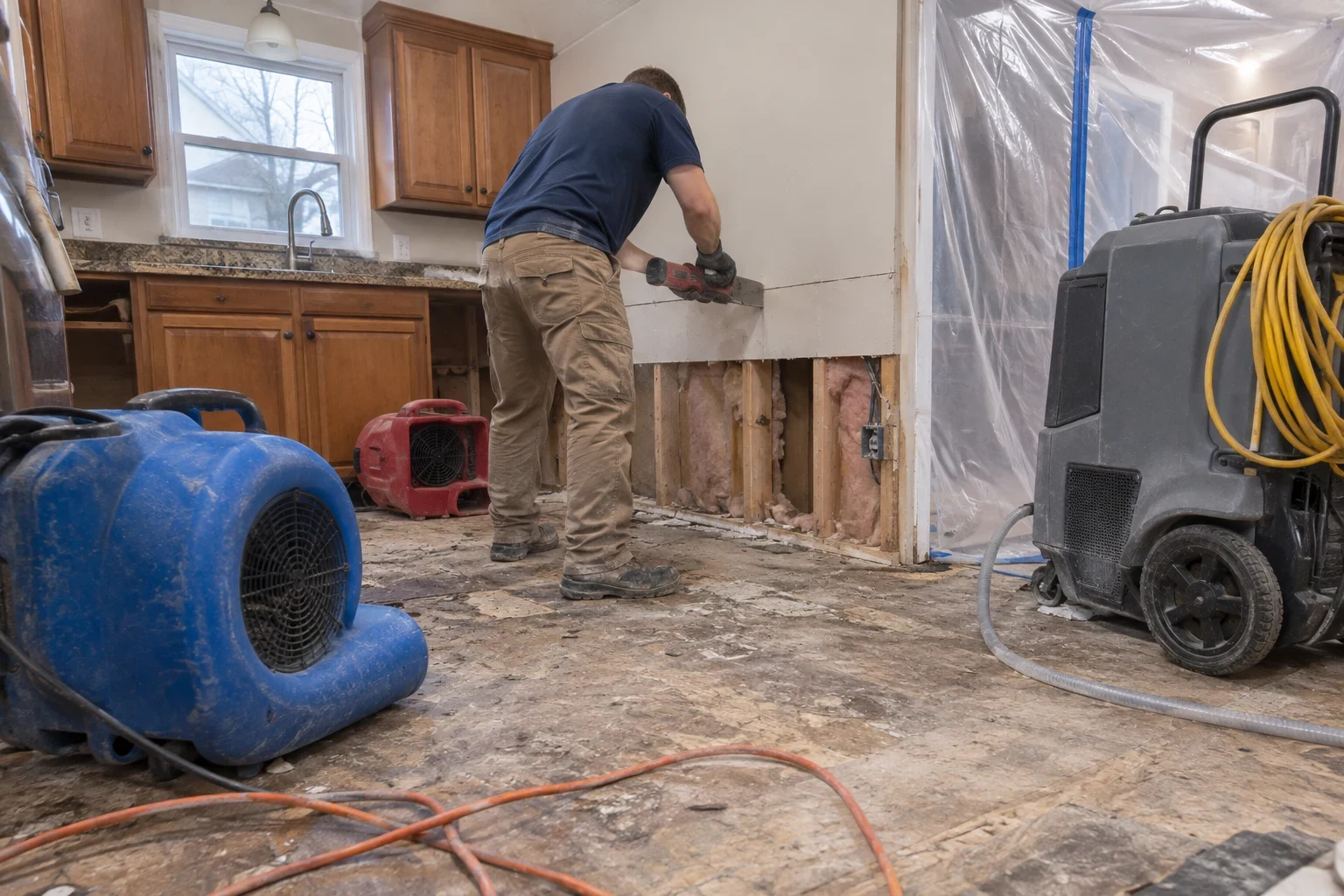
Mechanicsville, VA
Water Damage Restoration in Mechanicsville, Handled by One Person
When water gets into your home, you speak with one person from the first call to the final walkthrough. We handle water extraction, drying and dehumidifying, mold remediation, sewage cleanup and the repairs that follow, for homes in Mechanicsville, Glen Allen and Laurel. The first visit is a free on-site inspection.
- Free on-site inspection
- One person, start to finish
- Moisture readings in writing
- Emergency water damage response
Where We Work
We are based in Mechanicsville, VA and serve homes across Hanover County and the north and east sides of the Richmond area. That includes Glen Allen, Laurel, Lakeside, Chamberlayne, Montrose and Dumbarton, as well as Highland Springs, East Highland Park, Sandston and Richmond itself.
- Mechanicsville
- East Highland Park
- Highland Springs
- Chamberlayne
- Richmond
- Laurel
- Glen Allen
- Lakeside
- Montrose
- Dumbarton
- Sandston
If you are nearby and do not see your town listed, ask when you call. Our Service Areas page has more detail.
What We Do After Water Gets In
Most water damage needs more than one kind of work. Standing water comes out first, then the structure is dried, then anything that grew or was soiled is dealt with, and finally the rooms are put back together. We do each stage ourselves and keep it under one plan, so nothing waits on a hand-off. You can read more on our water extraction, drying and dehumidifying, mold remediation, flood cleanup, sewage cleanup and repairs and rebuild pages.
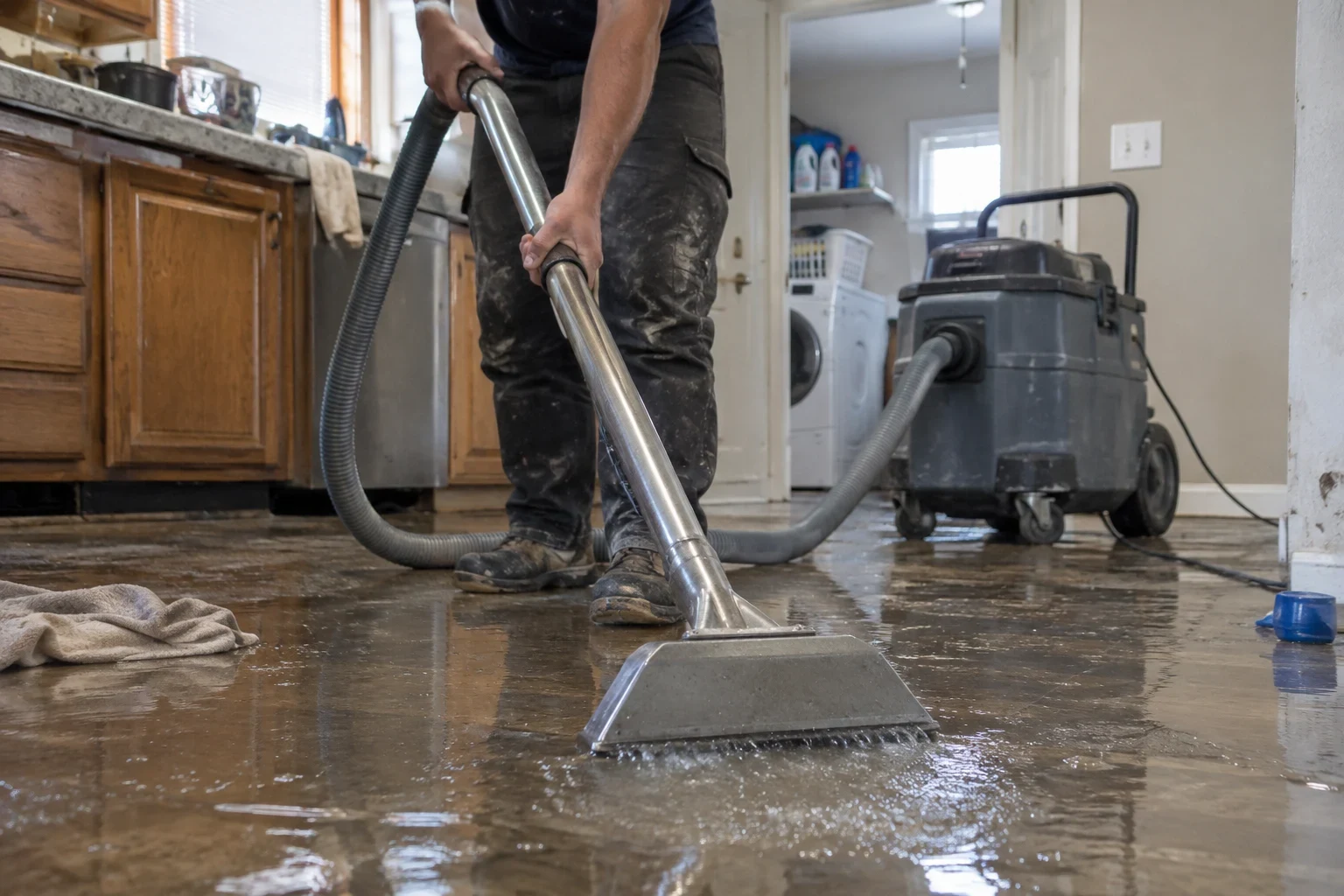
Water Extraction
Standing water pulled from floors, carpet and pad with powerful pumps, then measured so you know exactly how much moisture is left behind.
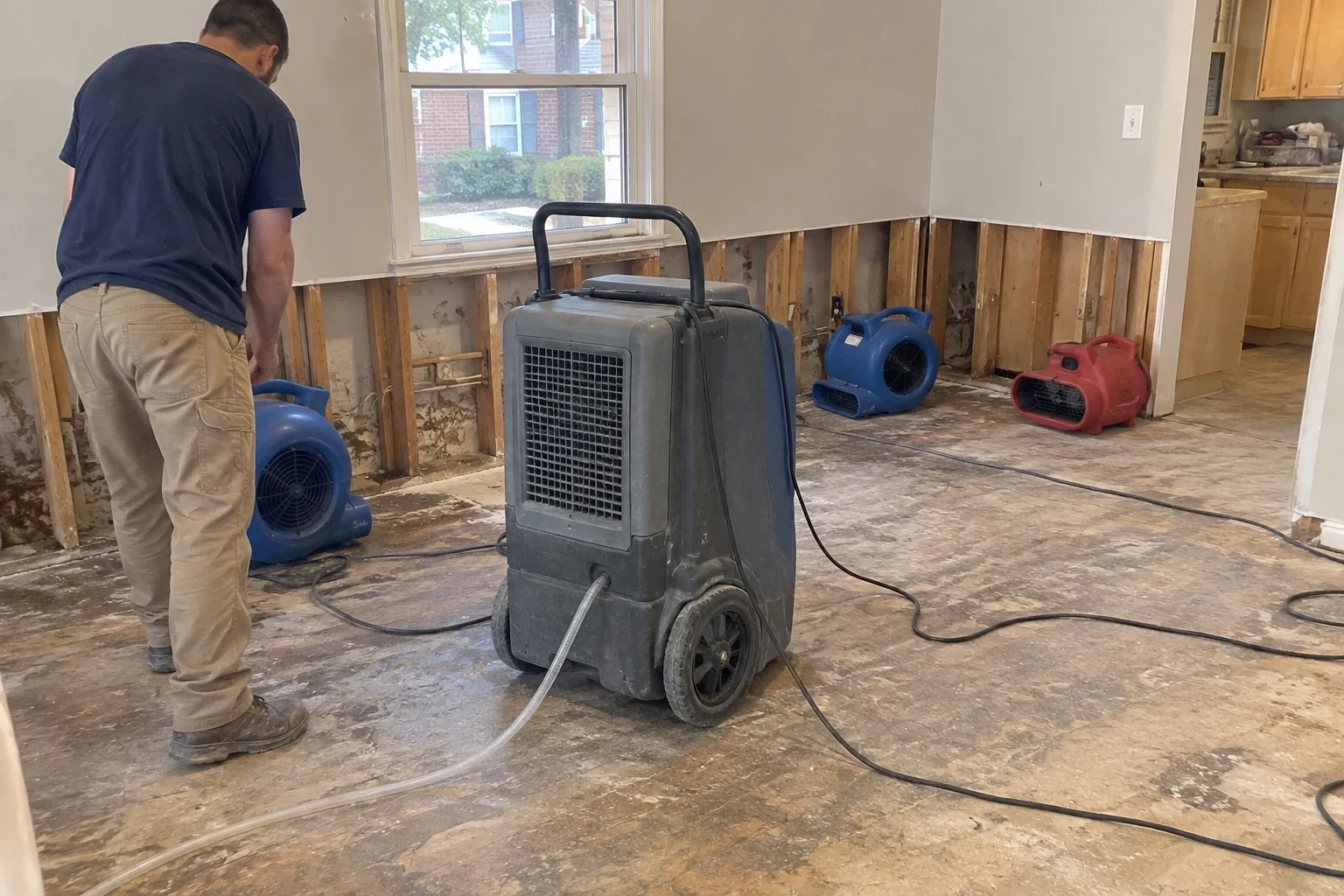
Drying and Dehumidifying
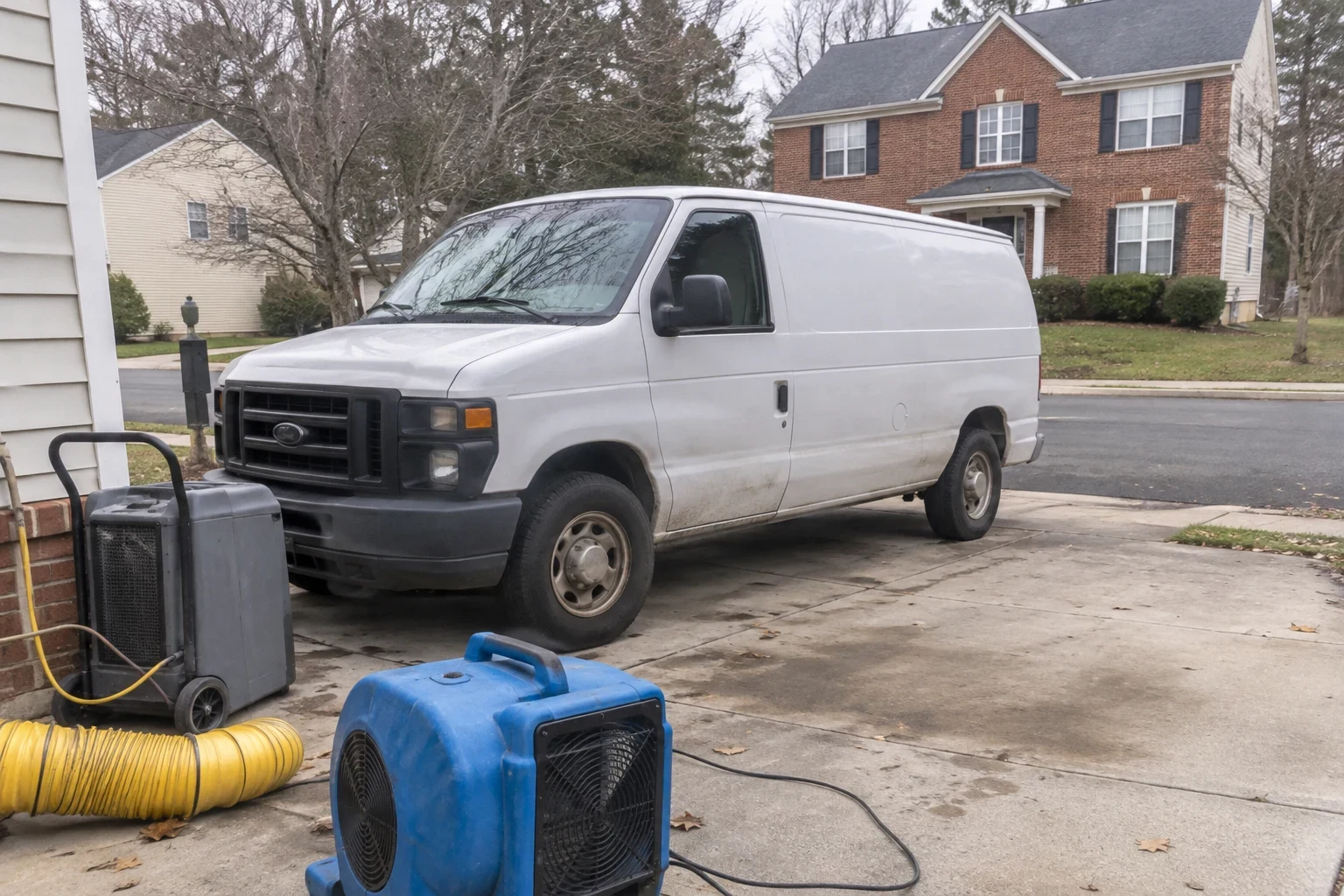
Air movers, dehumidifiers and daily moisture readings that bring floors, walls and framing back to dry, with one coordinator updating you throughout.
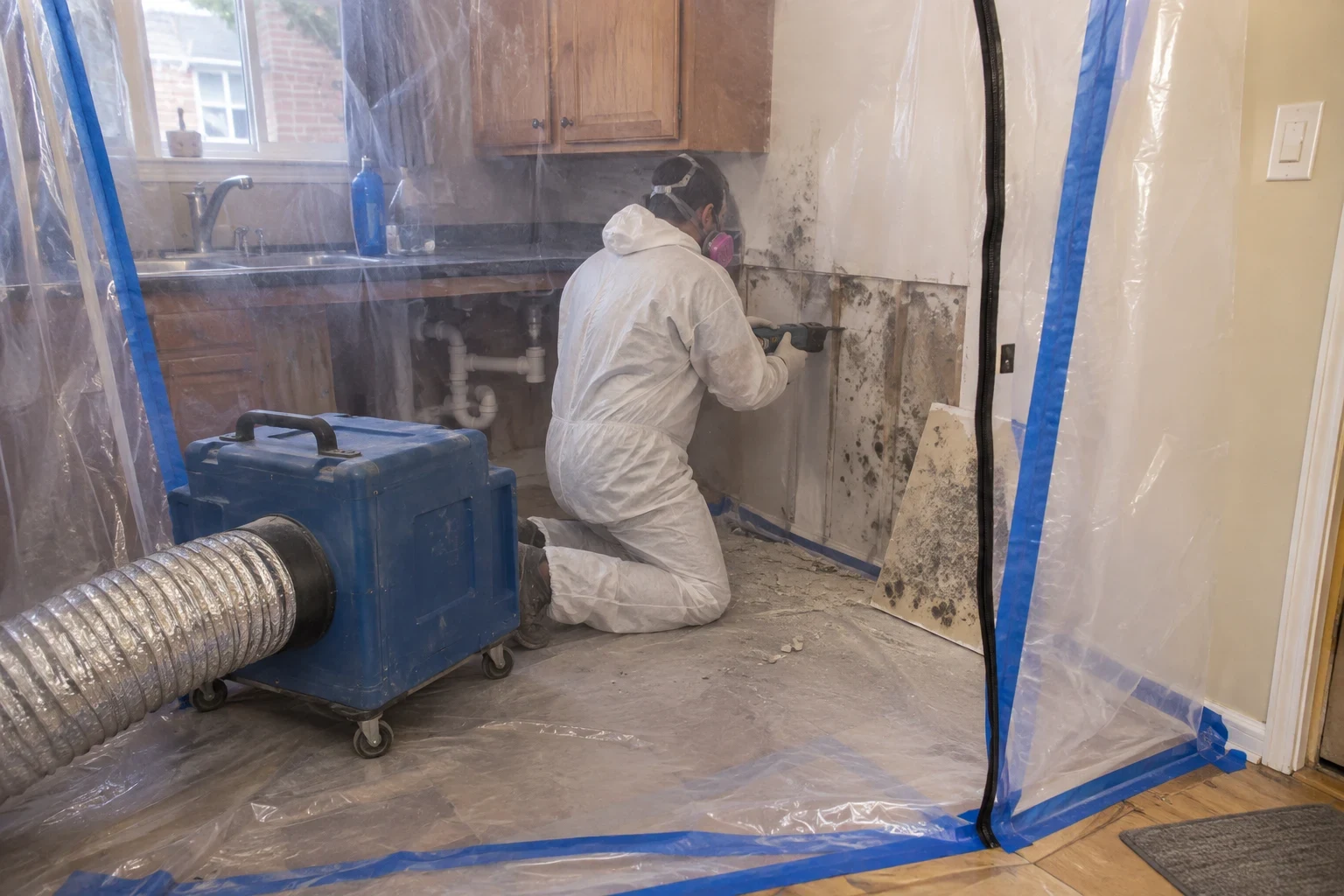
Mold Remediation
We seal off the affected area, remove what can't be cleaned, dry the structure and help fix the moisture source so the mold has no reason to return.
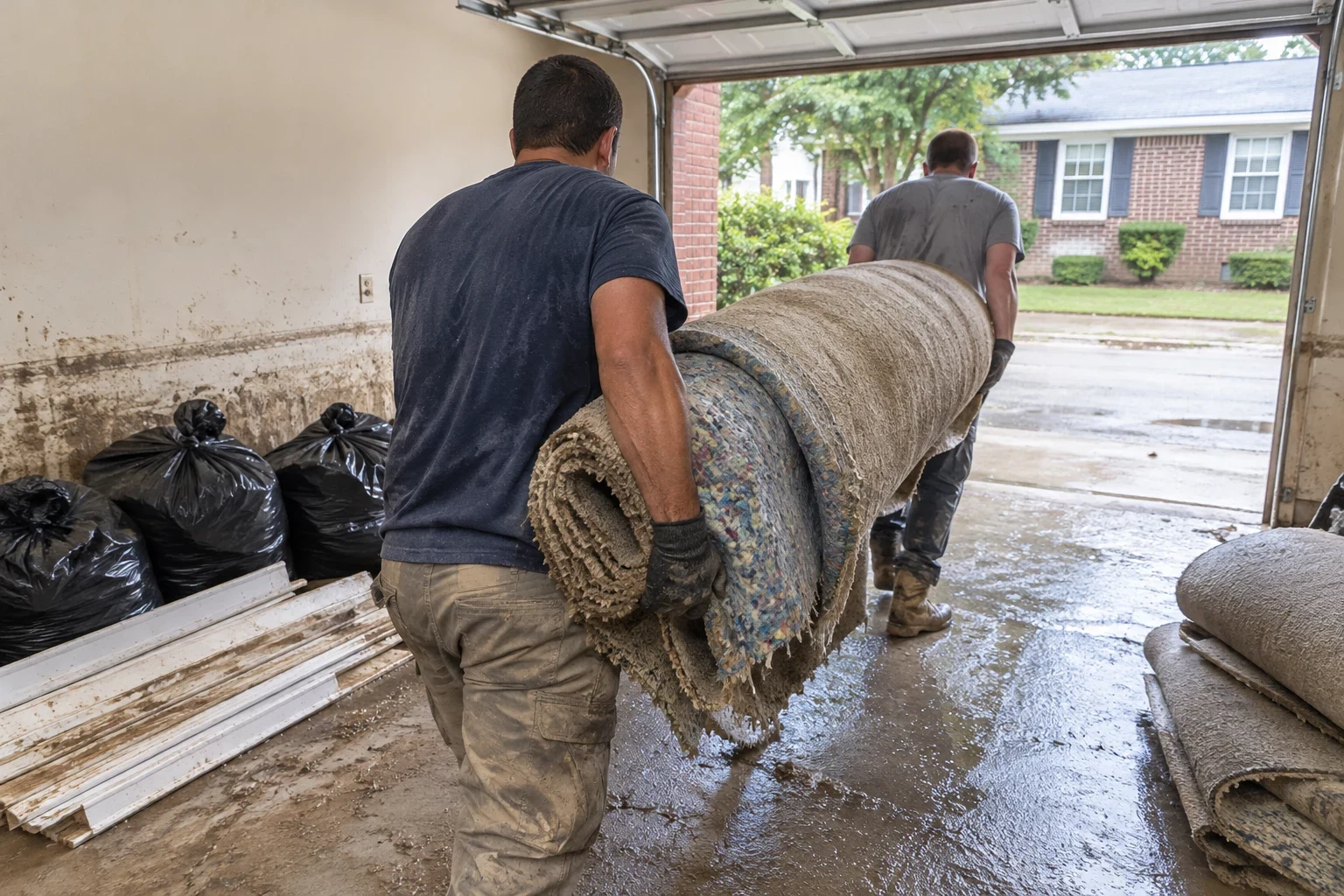
Flood Cleanup
After a storm or rising water, we clear out water, silt and soaked materials, sanitize what remains and dry your home properly.
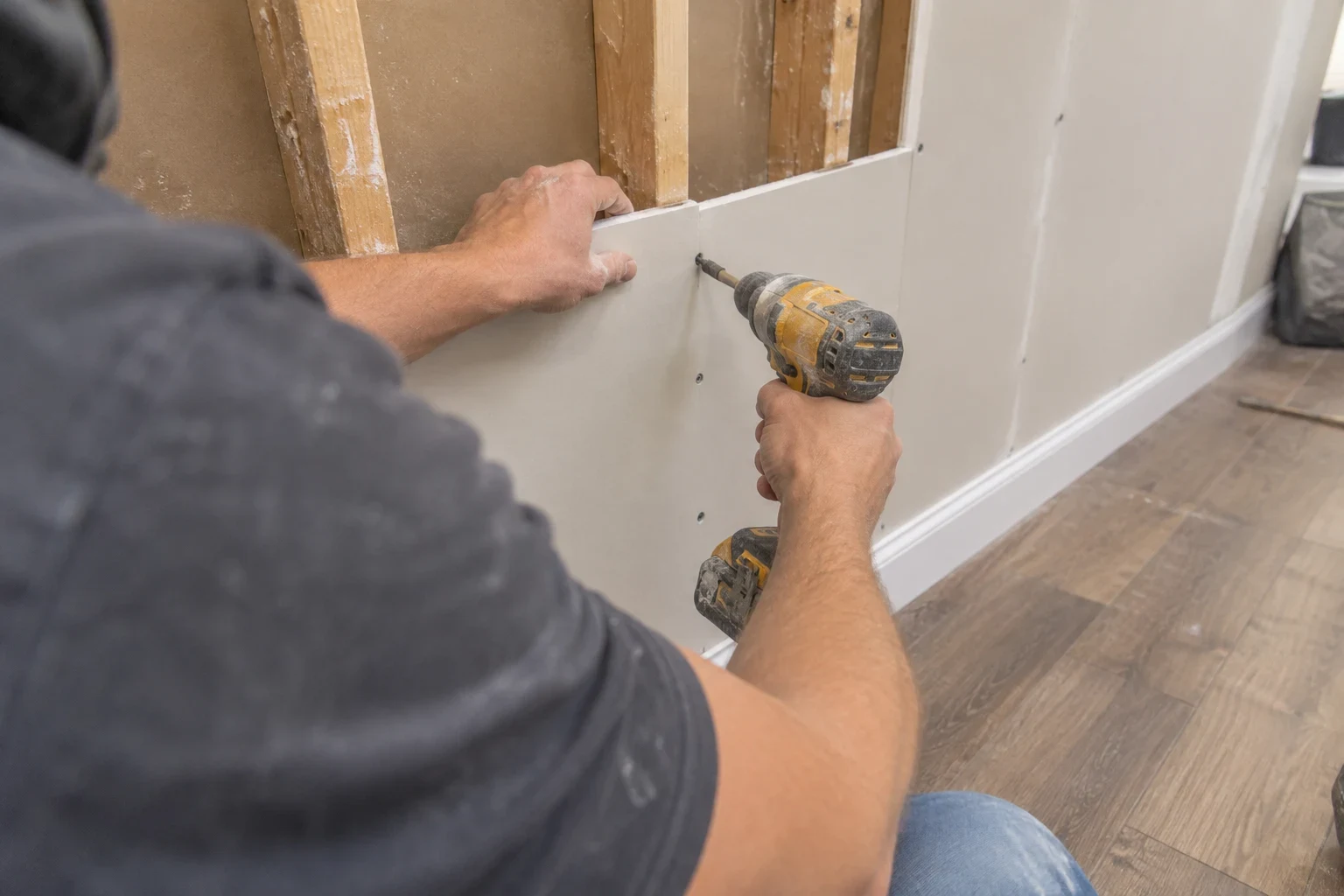
Repairs and Rebuild
Once your home is dry, we replace the drywall, flooring, cabinets and trim that came out, with one person coordinating every trade and finish.
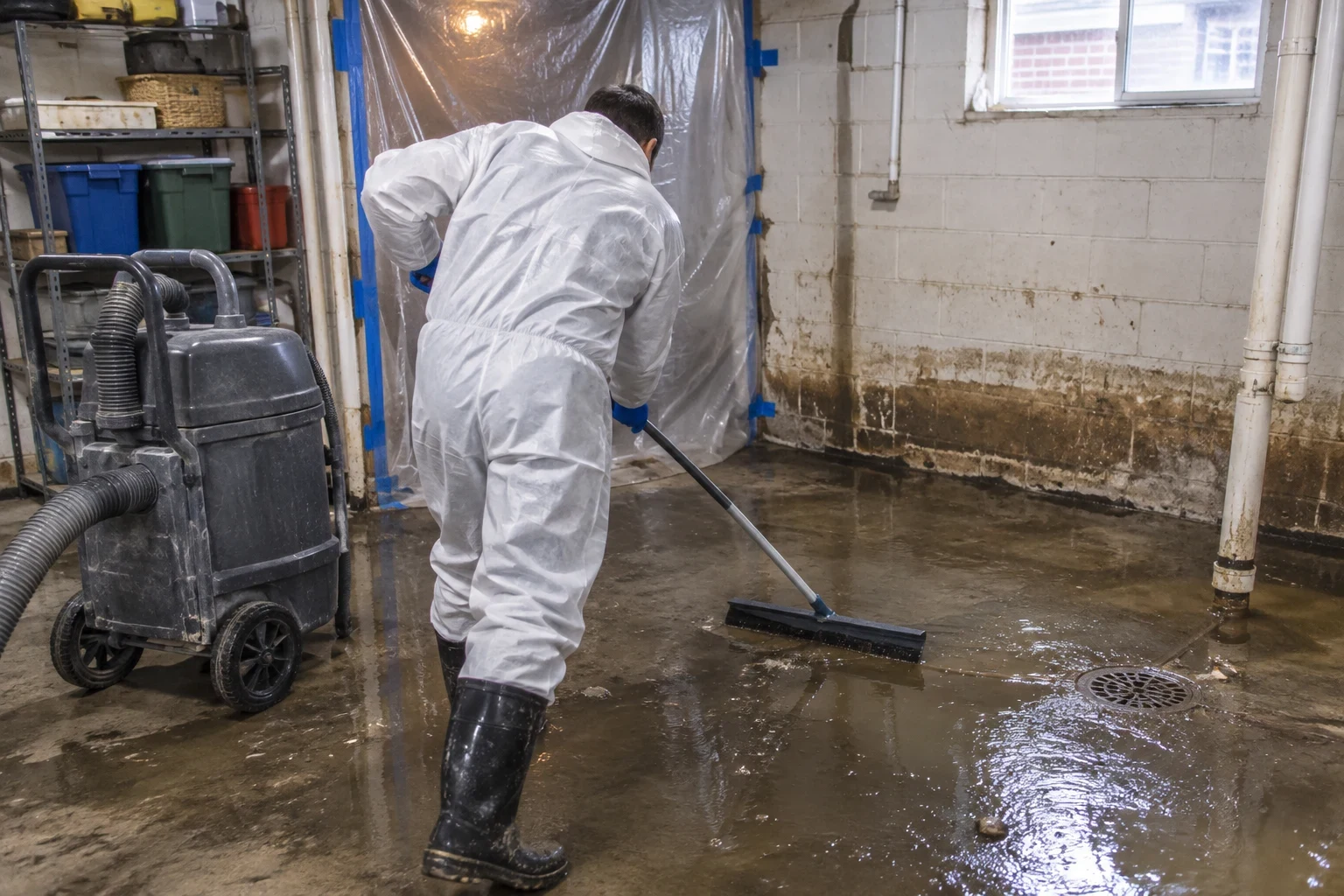
Sewage Cleanup
We remove sewage-soaked materials, disinfect what can be saved and dry the structure so the affected rooms are clean and safe to rebuild.
How a Job Runs, From First Call to Final Walkthrough
Each stage has a clear finish line, and the person running your job tells you when we reach it.
- 1
The call and the inspection
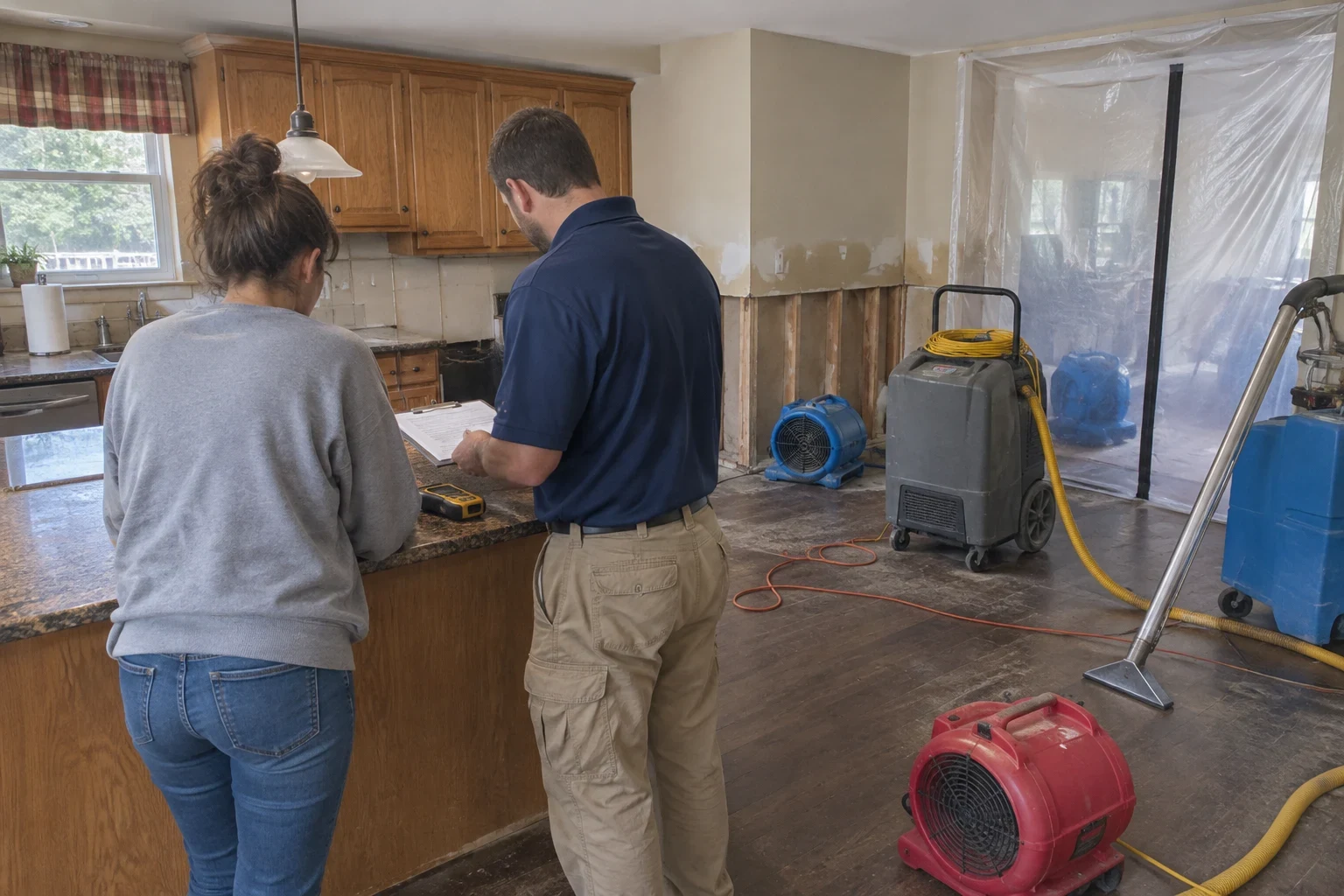
You describe what happened and we come out for a free on-site inspection. We find the source if it is still active, map the moisture, and photograph everything.
- 2
Stop the water and pull it out
Once the source is stopped, we extract standing water with truck-mounted or portable equipment and lift what can be saved off wet floors. This step does more for drying time than anything after it.
- 3
Dry to a measured target
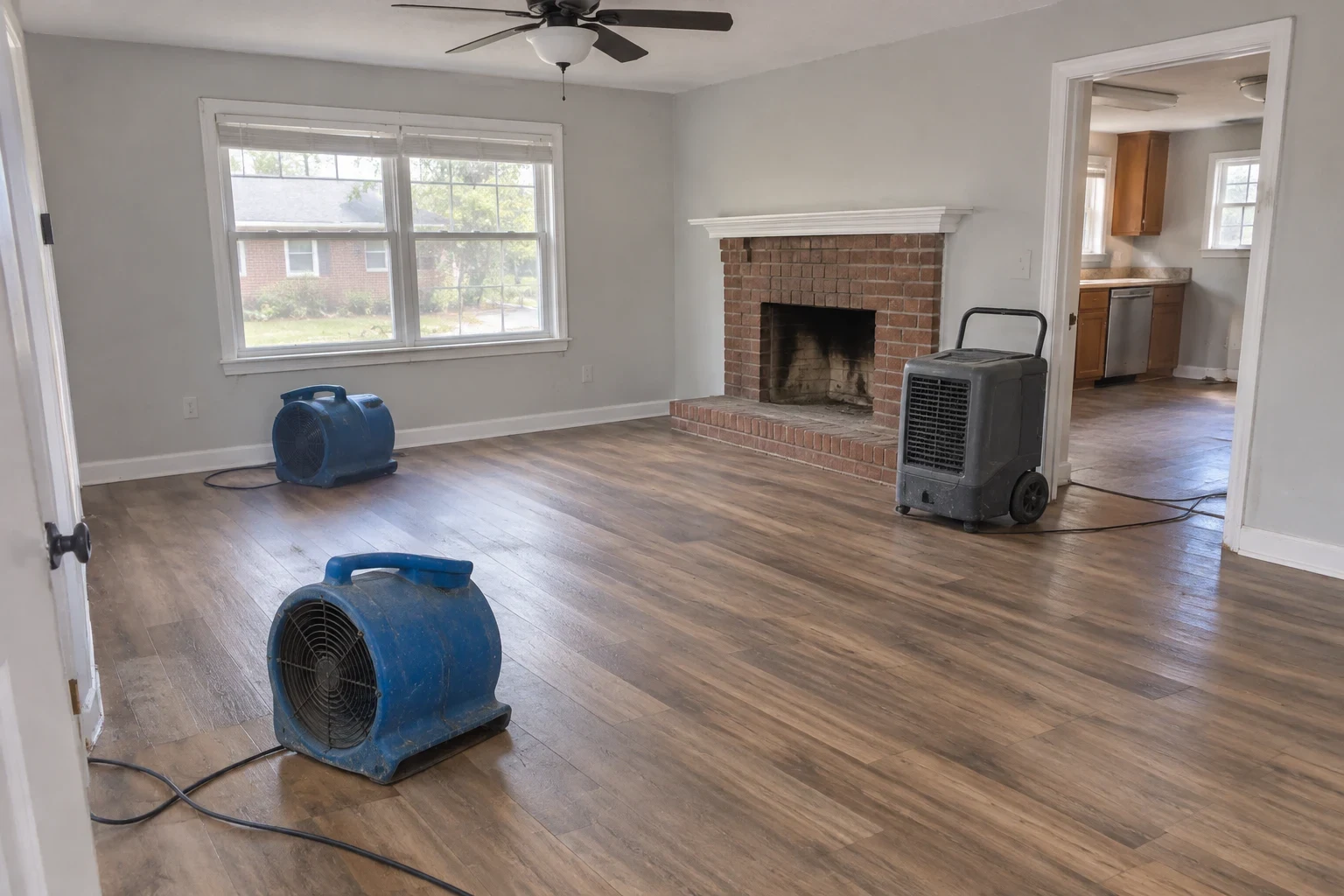
Air movers and dehumidifiers go in, placed for the room and the material. We take readings on each visit and keep the equipment running until framing and subfloor reach normal levels, not just until the surface feels dry.
- 4
Clean, treat and document
Affected areas are cleaned and treated, with the work area sealed off where mold or sewage is involved. Your file of photos and moisture logs is ready for your insurer.
- 5
Repair and hand back
We replace drywall, flooring, trim and paint as needed, clean up, and walk the rooms with you before we call the job finished.
Why Homeowners Call Us
Water damage upends a household on its own. We aim to keep the restoration itself calm and orderly, with one person who knows your home and your file.
- One person, the whole way through
- Whoever inspects your home stays your contact from the estimate to the final cleanup. There is no retelling your story to a new crew lead every few days. If the schedule shifts, the news comes from someone you already know.
- Readings before recommendations
- Moisture meters and thermal imaging show where water really went, which is often well past the visible stain. You see every reading and photo. That spares drywall that can be dried and catches wet framing behind a wall that looks fine.
- Care for what stays
- Hardwood, trim, cabinets and finished floors are often worth saving. We cover floors along our path, lift and block furniture off wet carpet, and choose drying over demolition wherever a material will genuinely recover.
- Clear help with your claim
- Your adjuster receives a tidy file: photos, daily moisture logs and an itemized scope written in plain terms. We work with most major insurance companies, and we explain the usual steps a claim follows. What gets covered is your insurer's call, and we are upfront about that.
- Quick to respond when it matters
- Water moves into subfloors and wall cavities within hours. For urgent situations we provide emergency water damage response, with the goal of being on site in 60 mins or less.
What Moves the Price of Water Damage Restoration
Every water loss is priced from what we actually find in your home: the type of water, the materials it touched and what is hiding underneath. After the free inspection, you receive a written estimate broken out line by line. Each item has a reason, and we are glad to walk you through it.
Your estimate arrives in writing, itemized, and if opening a wall or floor reveals something new, we photograph it and discuss it with you before it becomes part of the job.
- The source of the water
- A burst supply line brings clean water, while groundwater and sewage backups carry bacteria and debris. That kind of water calls for protective gear, disinfection and removal of porous materials that cannot be made safe, which lengthens the job.
- How far and how deep it traveled
- Square footage is only part of it. Water that wicked into carpet padding, subfloor or the lower edge of drywall needs more equipment and more drying days than water that pooled on tile.
- The materials it reached
- Solid hardwood, engineered flooring, carpet, plaster and drywall each behave differently when wet. Some recover with careful drying in place. Others swell, separate or hold odor and have to be replaced.
- How long it sat before discovery
- A leak caught the same morning is a lighter job than one found a week later. Longer exposure raises the odds of mold, which can add sealed work areas and remediation to the scope, and humid Virginia summers shorten that window.
- Access and hidden conditions
- Crawl spaces, finished basements and water trapped behind cabinets take more effort to reach. Soft subfloor or soaked insulation found under the surface can change the repair plan, and you see it before anything changes.
Questions Homeowners Ask Us
Something not covered here? (804) 707-7194
How quickly can you get to my home?
When the situation is urgent, our goal is to be on site in 60 mins or less. On the call, let us know if water is still running, and we will talk you through closing the shutoff valve while the crew is on the way.
Is the inspection really free?
Yes, there is no charge for the on-site inspection. We locate the source, take moisture readings and explain what we found. A written estimate follows, and the decision to proceed is yours.
Will my insurance pay for the work?
Coverage comes down to two things: the wording of your policy and where the water came from. A burst pipe or a failed appliance hose is often treated differently from water that entered from outside, which usually needs separate flood coverage. We work with most major insurance companies and assemble the photos and moisture records adjusters tend to request. The coverage decision itself always rests with your insurer.
Do I need to leave my home during the work?
Most families stay home through the job. Drying equipment hums day and night for several days, so we position it to keep bedrooms and the kitchen usable whenever possible. Sewage losses and larger mold jobs can be another matter, and we will say so early if moving out for a few days is the wiser choice.
How long does drying take?
Many rooms reach dry readings within three to five days, while dense materials such as hardwood or plaster may need more time. We follow the meter rather than the calendar and show you the numbers at every visit.
Will I get mold?
Mold can start within a day or two when wet materials stay damp, particularly in warm, humid weather. Fast extraction and thorough drying are the strongest prevention. If growth is already present, we explain the scope and take care of it through our mold remediation service.
Who do I talk to once the job starts?
The same person who inspected your home. They manage the schedule, coordinate the crew and any repairs, and remain your contact until the final walkthrough.
A Local Restoration Company That Keeps It Simple
This company is built around a simple idea: after water damage, a homeowner should have one person to talk to. That person inspects your home, writes the estimate, coordinates the crew and the equipment, and stays reachable until the repairs are done and the house is clean.
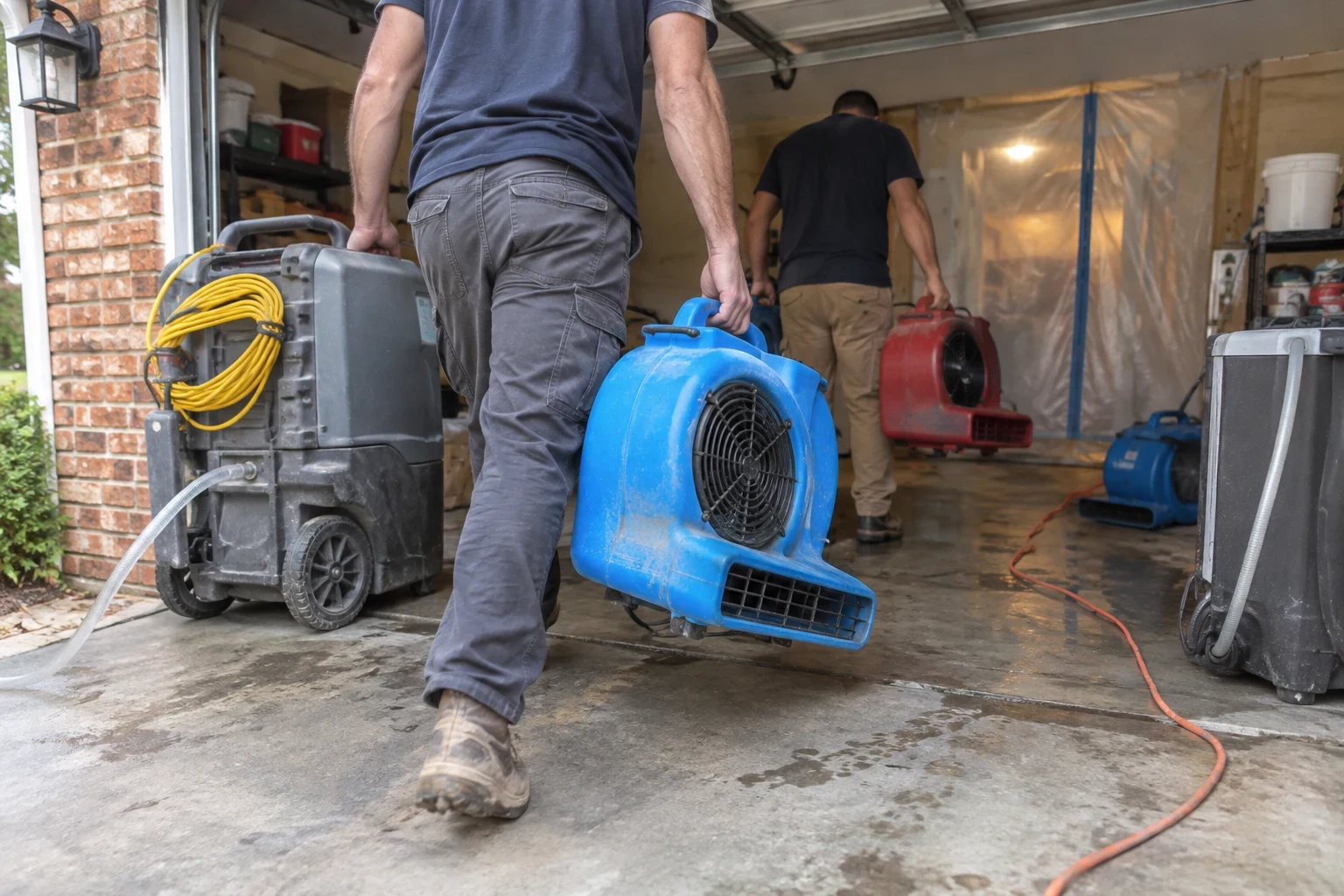
We work carefully in lived-in homes. That means protecting floors and furnishings, explaining why a fan is placed where it is, and leaving each room tidy at the end of the day. Many homes around Mechanicsville sit over crawl spaces or have finished basements, so we pay close attention to the areas you cannot easily see.
We would rather dry a good oak floor than replace it, and we will tell you honestly when something cannot be saved.
Water Where It Should Not Be?
Start with a free on-site inspection. You will meet the person who will see your job through, and you will know what is wet, what can be saved and what comes next.