ServicesWater Extraction
Water Extraction in Mechanicsville
When water is sitting on your floors, every hour lets it wick further into drywall, subfloor and cabinets. We remove it with truck-mounted and portable extractors, check what is still wet with meters, and one person keeps you informed from the first look to the last reading.
Getting the water out is the first job, and the most urgent
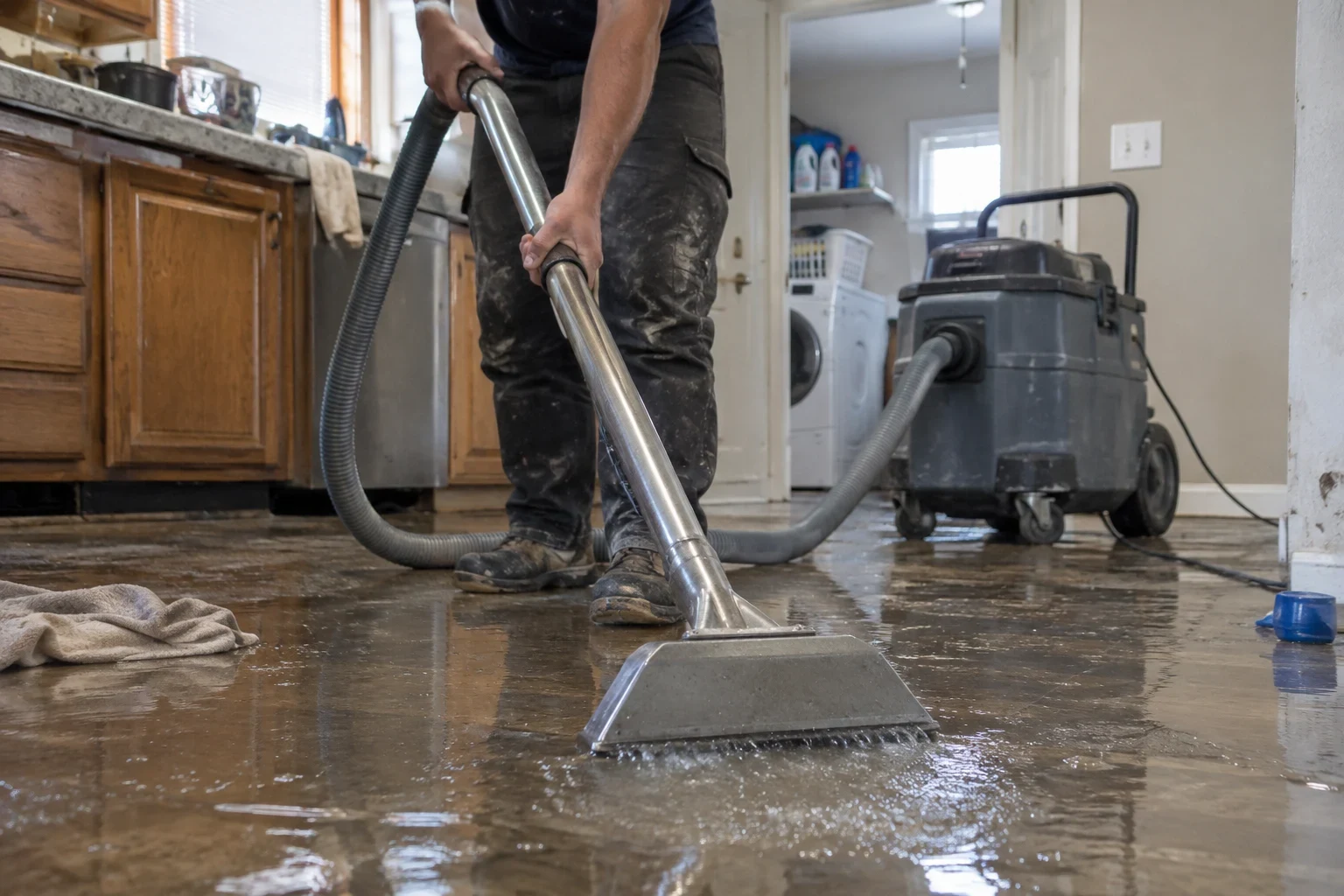
Water extraction means physically removing liquid water from your home: off hard floors, out of carpet and pad, and from crawl spaces or basements where it has pooled. A fan cannot do this. Extraction pulls out far more water in an hour than evaporation can manage in days, which is why it comes before any drying equipment goes in.
The sooner it starts, the more of your home we can usually save. Hardwood that is extracted quickly often lies flat again once dried, while hardwood left standing in water tends to cup and lift. Drywall that wicks water only a few inches can often be dried in place. Left overnight, the same wall may need its lower section cut out.
From your first call, the same person handles your job. They schedule the crew, explain what the meters show, and answer your questions, so you never have to repeat your story to someone new.
What our water extraction work includes
- Truck-mounted and portable extraction
- Large volumes come out with a truck-mounted unit. Portable extractors handle upper floors, closets and small rooms where long hoses are awkward.
- Carpet and pad decisions
- Weighted extraction tools press water out of carpet and pad. If the pad is saturated or the water was dirty, we will say plainly that it should be removed rather than dried.
- Moisture mapping
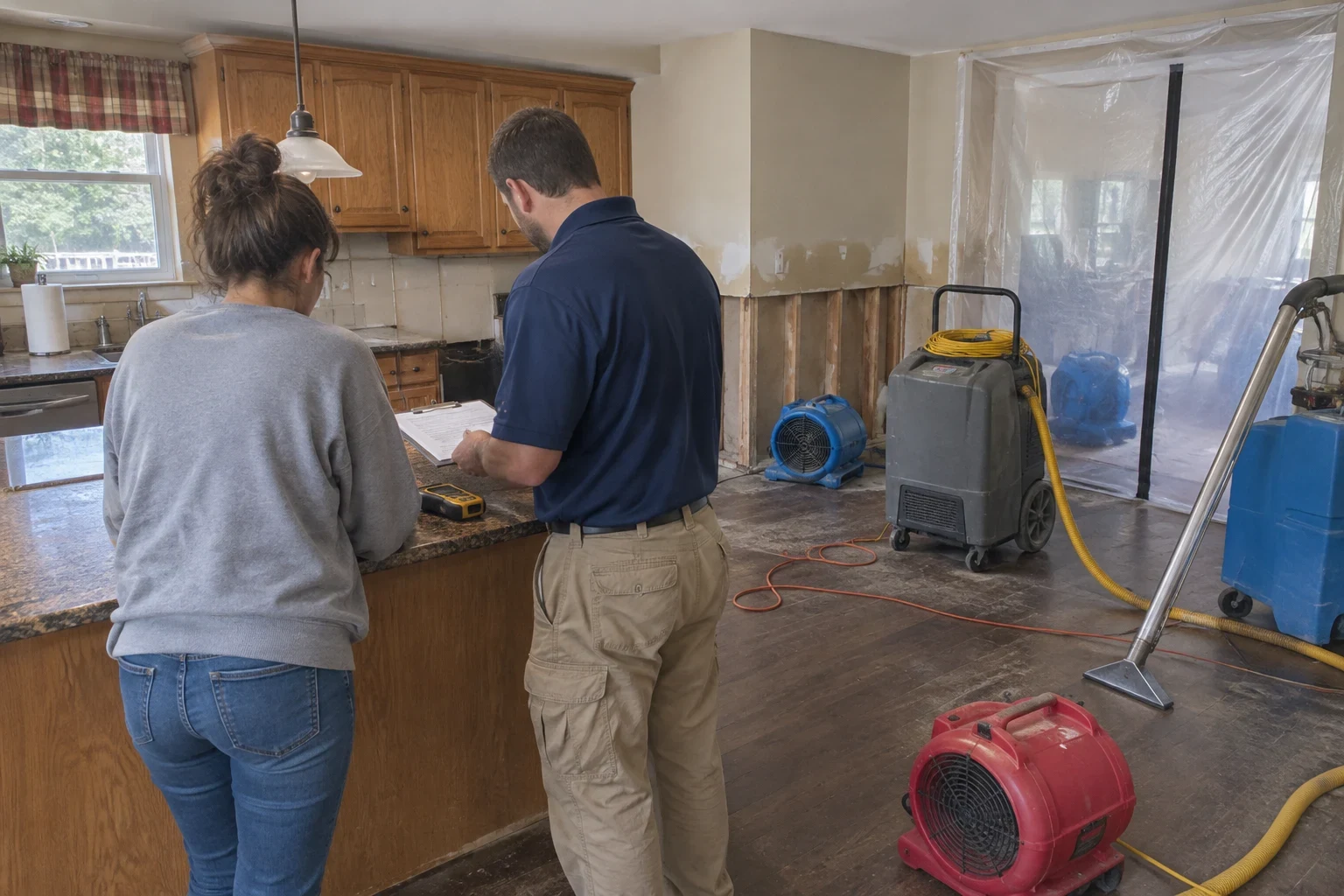
- Pin and non-invasive meters show how far water has spread under flooring and up walls. We record the readings and take photos so you and your insurance adjuster are looking at the same evidence we are.
- Care for furniture and dry rooms
- We raise furniture on pads or carry it to a dry room, and lay protective covering on the routes our crew walks. Rugs, boxes and other small items are picked up off the floor before they absorb more water.
- Crawl space and basement pumping
- Where water has collected below the living space, we pump it out and check insulation and framing for saturation before planning the next step.
Signs you need water extraction now
Standing water on any floor
Even a thin layer spreads under baseboards and into the subfloor. It needs to come out today, not after it seems to dry on its own.
Carpet that squishes underfoot
If pressing on carpet brings water to the surface, the pad below is full. Towels and a shop vacuum will not reach it.
Water at the base of walls
Dark lines, bubbling paint or soft drywall near the floor mean water is wicking upward. Quick extraction limits how high it climbs.
A burst line, failed water heater or overflowing appliance
Clean supply water can run for a long time before anyone notices, especially in a finished basement. Shut off the main valve if you can, then call us.
Water in the crawl space after heavy rain
The strong summer thunderstorms we see around Mechanicsville can fill a crawl space quickly. Standing water under the house raises humidity in every room above it.
What affects the cost of water extraction
Every price starts with a free on-site inspection, because the right figure depends on what is actually wet in your home. You then get a written, line-item estimate that names each task and why it is needed, and no work goes ahead until you have read it. On the insurance side, we work with most major insurance companies, and your contact can explain the usual order of a claim while your adjuster makes the coverage decisions.
Volume of water and how far it traveled
Clearing a single wet room takes less time and equipment than following water that has crept through several rooms or seeped down to the level below.
Where the water came from
A burst supply pipe or appliance line leaves clean water that needs fewer precautions. Gray or contaminated water calls for heavier protective gear, and more porous material usually has to be removed rather than dried.
Flooring and materials
Carpet over pad, engineered wood, solid hardwood and vinyl plank each release water in their own way. Some are worth the effort to save, and others cost less to replace than to rescue.
Access and location
Basements, crawl spaces and upstairs rooms mean longer hose runs and smaller portable machines. Tight spaces simply take longer than an open main floor.
How a water extraction visit runs
- 1
Your call and our arrival
You speak with the person who will coordinate your whole job. We are on site in 60 mins or less, and the crew arrives knowing what you have already told us.
- 2
Safety check and source
We confirm the water source is stopped and check for electrical risk before anyone works in wet areas. We also judge whether the water is clean, gray or contaminated, because that changes what can be saved.
- 3
Extraction and moisture readings
We remove standing water room by room, then go back over carpet and flooring with weighted tools. Meter readings show where water is still hiding.
- 4
A clear plan before we leave
Your contact walks you through what was found, what we recommend removing and what can be dried in place. Most jobs move straight into drying and dehumidifying, and you will know the schedule for equipment checks.
Water extraction questions
Can I just use a wet vac and fans myself?
For a small, clean spill on tile, often yes. Once water has soaked into carpet pad, slipped under baseboards or reached the subfloor, a wet vac only lifts what is on the surface. What stays hidden can warp floors or start mold growth within days.
Will my carpet have to be thrown away?
Not always. Carpet wet with clean water and extracted promptly can often be dried and kept, though the pad beneath it usually needs replacing. If the water came from a sewer backup or outdoor flooding, we recommend removing it for health reasons and will explain our reasoning.
How soon will a crew arrive, and what should I do while I wait?
Our crew is on site in 60 mins or less after you call. In the meantime, turn off the main water valve if you can reach it safely, carry valuables to a dry room, and keep away from areas where water could reach outlets or cords.
Does extraction mean my home is dry?
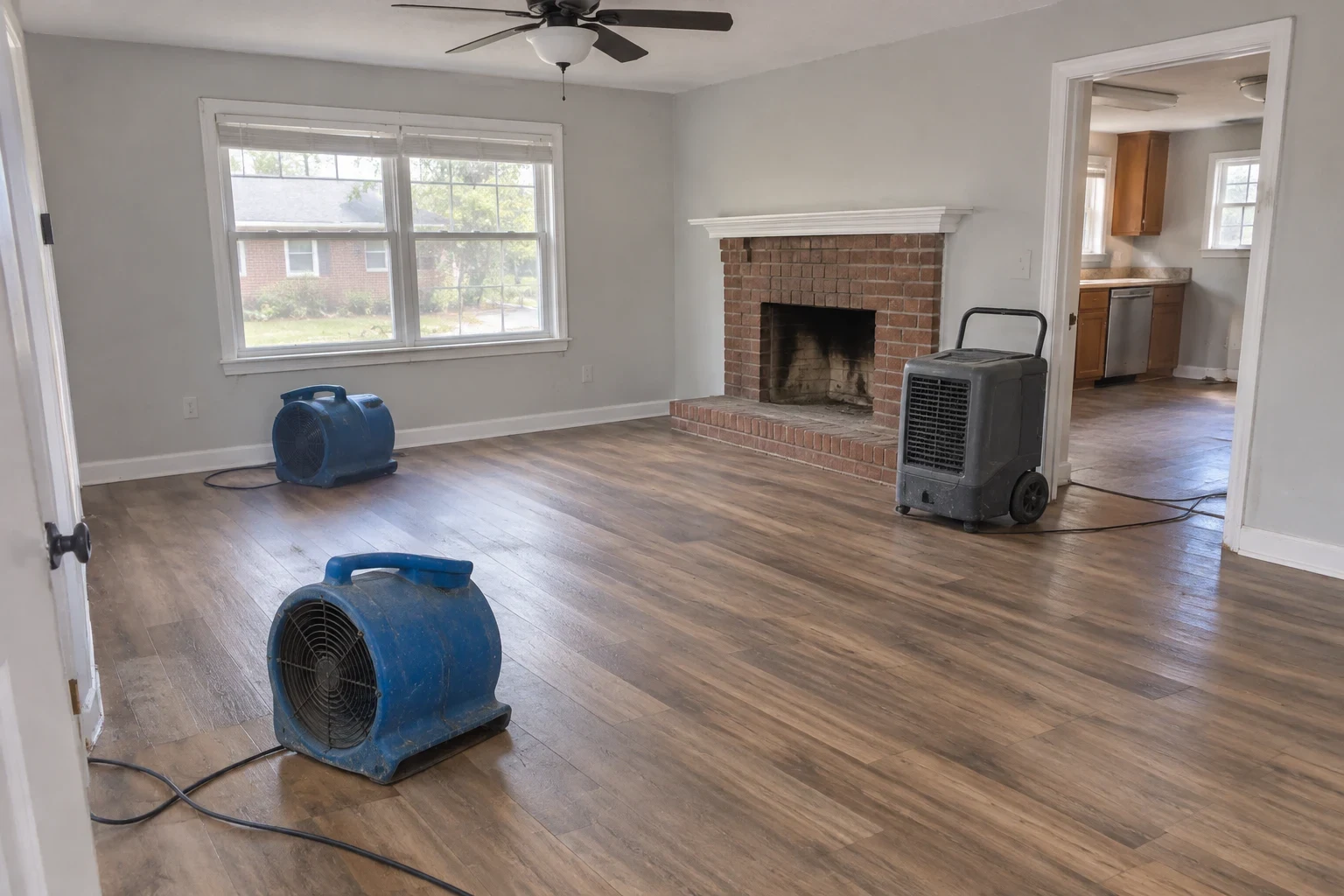
No. Extraction takes out the liquid water, but floors, walls and framing still hold moisture. That is why it is followed by drying and dehumidifying, with meter readings until materials return to normal levels.
Who do I talk to while the work is going on?
One person, from the first call to the final readings. They coordinate the crew, share photos and readings with you, and can answer your insurance adjuster's questions about what we found.
Water on the floor right now
The faster it comes out, the more of your floors and walls we can usually keep. We serve Mechanicsville and nearby towns including Glen Allen, Laurel and Sandston.