ServicesDrying and Dehumidifying
Drying and Dehumidifying in Mechanicsville
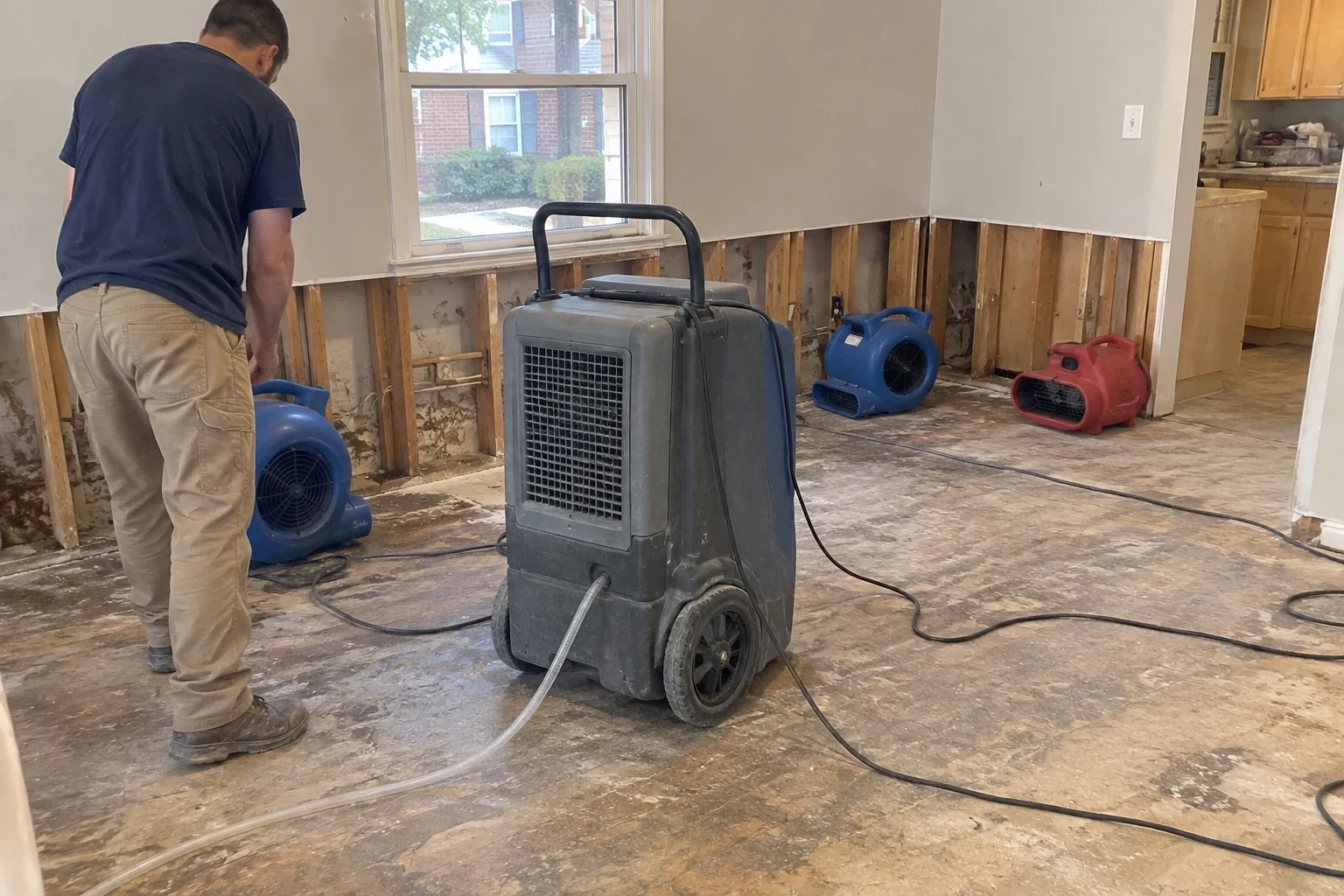
Extraction clears the puddles, but subfloors, drywall and framing can hold water for days, long enough for wood to warp and mold to start. We set professional air movers and dehumidifiers, check moisture levels daily, and one person keeps you updated until your home measures dry.
Why water left behind keeps doing damage
Mopping and household fans dry what you can see. Water that soaked into drywall, carpet pad, hardwood and the bottom plates of your walls stays there for days, and in a closed house it slowly raises the humidity in every room. Hardwood cups, baseboards swell, paint blisters, and mold can begin on damp materials within a couple of days.
Structural drying is the controlled version of that process. We move air across wet surfaces to release moisture, then capture it with dehumidifiers so it leaves your home instead of settling somewhere else. Readings guide every decision, so equipment comes out when materials are dry, not when they feel dry.
It usually follows water extraction, and it is the step that decides whether floors and walls can be saved or need repairs and rebuild later. One coordinator handles your job from the first inspection to the final reading, so you always know who to ask.
What our drying work includes
Moisture mapping
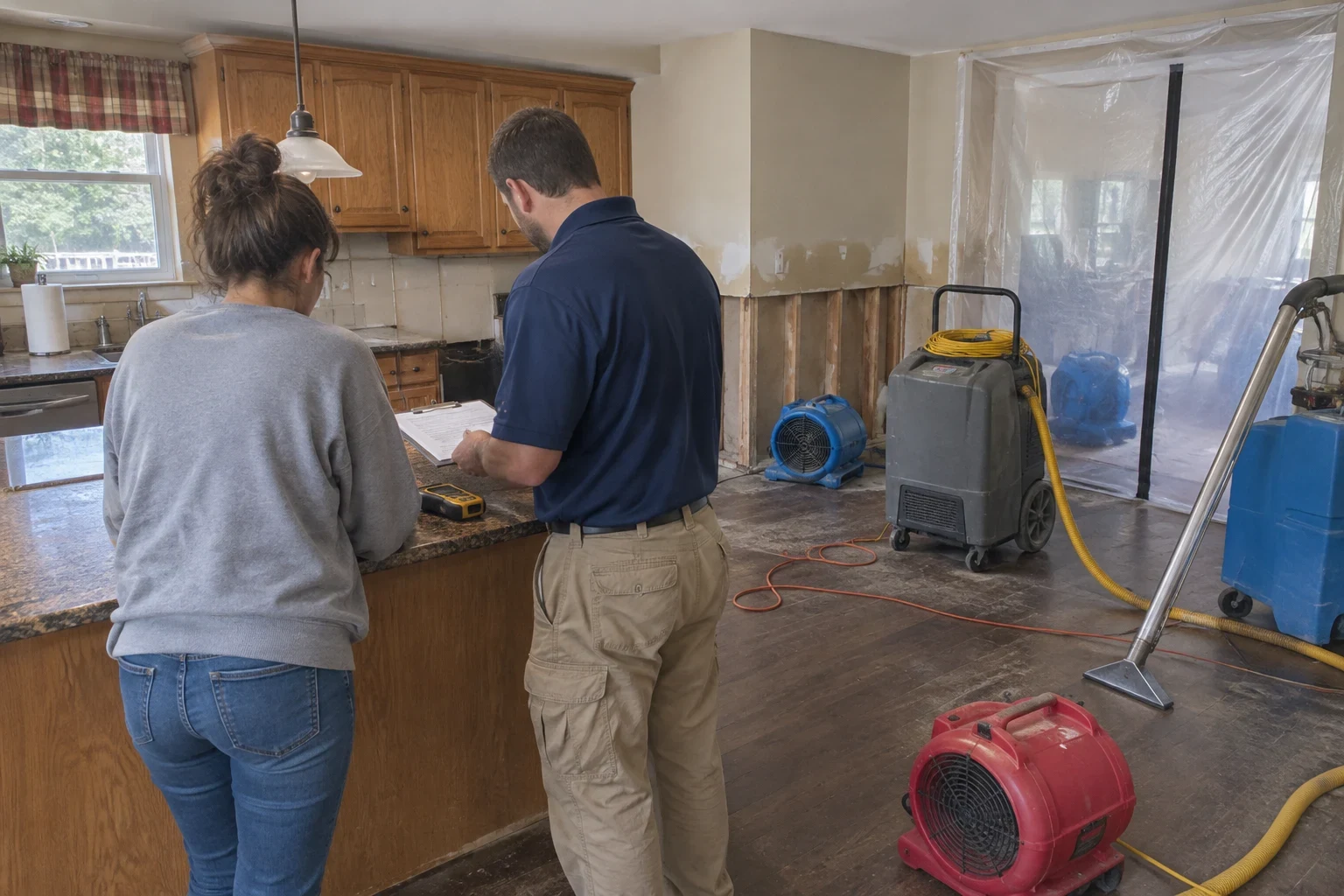
We check floors, walls and ceilings with pin and non-invasive meters and a thermal camera, then mark wet areas on a simple sketch of the affected rooms. That map decides where equipment goes and becomes the baseline we measure against.
Air movers placed with purpose
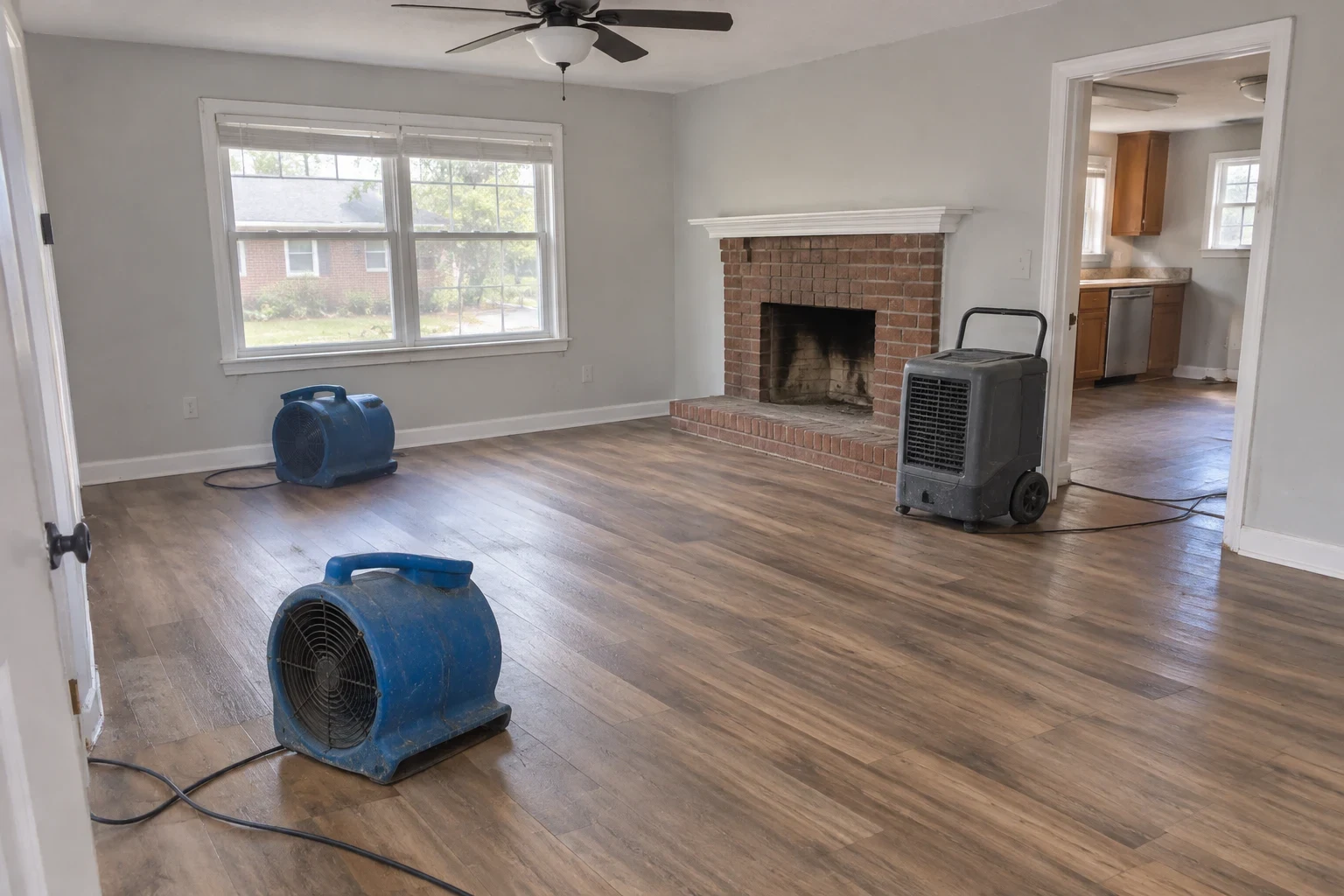
Fans are angled along walls and under lifted carpet edges to keep air sweeping across wet surfaces. More is not always better. The right number for the room dries faster and keeps the noise down.
Low-grain refrigerant dehumidifiers
These units keep pulling water from the air even as the room gets drier, which ordinary household dehumidifiers struggle to do. We drain them to a sink or pump so nobody is carrying buckets.
Hardwood and wall cavity drying
Where it helps, we use drying mats on wood floors or vent wall cavities through small holes hidden behind the baseboard. That is far less disruptive than cutting out drywall.
Daily readings and photos
We record moisture and humidity each day, adjust equipment and tell you what changed. You see the numbers move toward dry, with photos you can share with your insurance company.
Signs your home needs professional drying
- Floors that feel spongy or start to cup
- Hardwood edges rising or laminate seams lifting means water is sitting under the surface.
- A musty smell that lingers
- An earthy odor a day or two after a leak usually means damp materials are still holding water, often inside a wall or under a cabinet.
- Swollen baseboards or soft drywall
- Drywall that crumbles at the bottom, or trim pulling away from the wall, has wicked water upward from the floor.
- Fogged windows and sticky air
- If the house feels muggy after a leak, moisture is evaporating into the air with nowhere to go. In a humid Virginia summer, that air will not dry out on its own.
- Water reached a basement or crawlspace
- Below-grade spaces dry slowly and hide water under flooring, behind paneling and along the sill plate.
How a drying job runs
- 1
Free on-site inspection
We go room by room together, measuring floors and walls so you can see which materials are holding water and which are already dry. You come away with a clear plan and a straight answer on what can be saved in place.
- 2
Setup and protection
We raise furniture onto blocks or move it out, protect finished floors in walkways and route cords to keep circuits safe. Equipment is placed so you can still use hallways and doorways where possible.
- 3
Daily monitoring
Your coordinator, or a technician they send, checks readings every day and adjusts fans and dehumidifiers. Many rooms reach dry in several days, depending on the materials and how long water sat.
- 4
Final readings and handoff
When materials match dry reference readings, we remove the equipment, clean the work area and give you the moisture log. If anything still needs repair, we explain why and can schedule repairs and rebuild.
What affects the cost of drying
Drying is priced by the size of the job and how long equipment runs, not a flat rate. We go over these factors during the inspection so nothing on the final bill is a surprise. We work with most major insurance companies, and our daily records show your adjuster exactly what was done.
- Area and number of rooms
- More wet square footage means more air movers and dehumidifiers on site.
- Materials that got wet
- Carpet and drywall dry fairly quickly. Hardwood, plaster and built-in cabinetry hold water longer and may need mats or cavity venting.
- How long the water sat
- Water caught early stays near the surface. Water that sat for a day or more travels into framing and subfloors and takes longer to remove.
- Type of water
- A clean supply line leak is the simplest case. Gray water from an appliance calls for antimicrobial treatment, and sewage is handled through our sewage cleanup service first.
Questions about drying and dehumidifying
- Can I just use my own fans and a store-bought dehumidifier?
- For a small spill on a hard floor, often yes. Once water has reached carpet pad, drywall or a subfloor, household units rarely pull enough moisture to dry it before damage sets in. If you are unsure, our free inspection will tell you which case you have.
- Will I need to leave my home during drying?
- Most families stay home. The equipment is safe to run around children and pets, and we place it to keep main paths open. We will tell you plainly if a room should stay closed off.
- How loud is the equipment, and can I turn it off at night?
- It runs at a steady hum, similar to a box fan on high. Please keep it running around the clock, because switching it off lets humidity climb back and stretches out the job. We can sometimes reduce fans near bedrooms once readings improve.
- Do you work with my insurance?
- We work with most major insurance companies. We document readings, photos and equipment daily and can explain the claims process, though your adjuster makes the coverage decisions.
- How fast can you get here?
- Our crew is on site in 60 mins or less. We answer water damage calls day and night, so a leak found late in the evening does not have to wait until morning. Drying that starts early usually saves more of your floors and walls.
- What happens if you find mold?
- We show you where and stop drying that area until it is addressed properly. Small spots can be handled as part of the job, while larger growth moves to our mold remediation service, coordinated by the same contact.
Get the moisture out before it settles in
One call reaches the person who will manage your drying from the first reading to the last. Emergency help is available day and night.