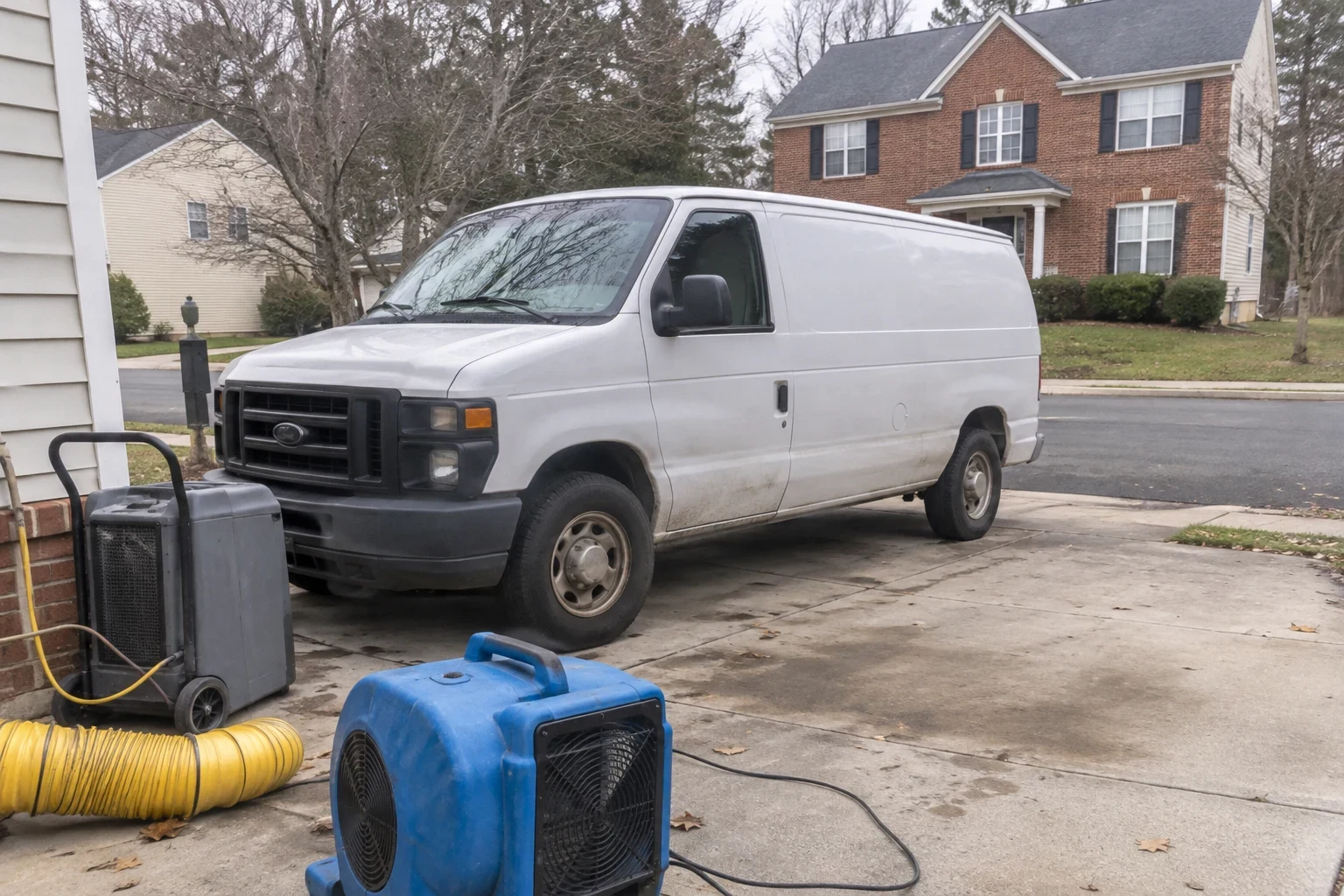
Water Damage Restoration in Mechanicsville and Nearby Towns
We restore water-damaged homes in Mechanicsville and the communities around it, from the first gallon extracted to the last coat of paint. One person from our team stays your contact the whole way, so you always know who is caring for your home and what comes next.
The towns we cover
Our work starts in Mechanicsville and reaches across the surrounding area. We are regularly in homes in Laurel, Glen Allen, Lakeside, Chamberlayne and Dumbarton, and we take calls throughout Richmond itself. Wherever you are in that circle, we aim to be on site in 60 mins or less, with extraction equipment on the truck and moisture meters ready to map how far the water has traveled.
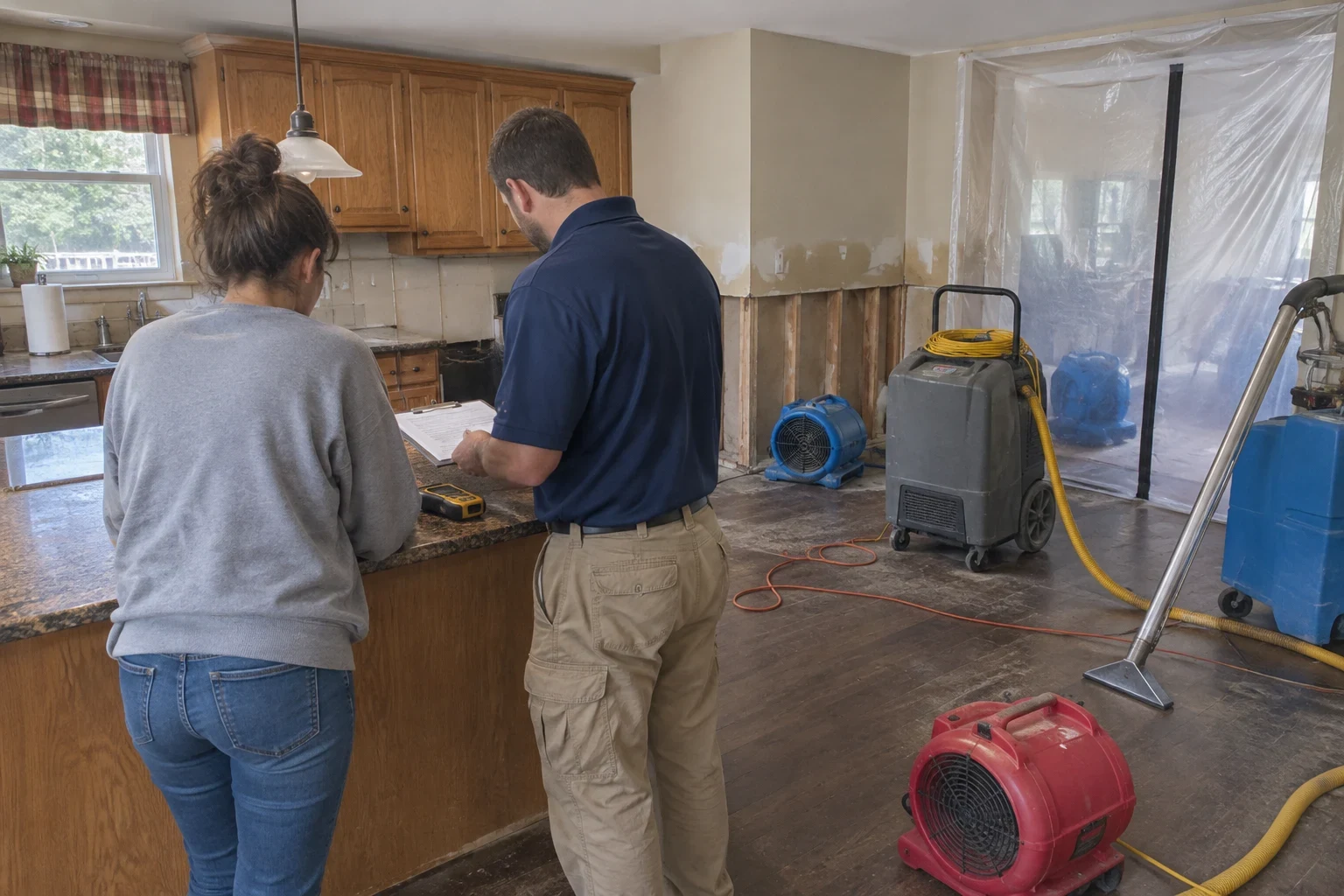
To the east and south we serve Montrose, East Highland Park, Highland Springs and Sandston. The process is the same in every town: a free on-site inspection, photos of what we find, and a written plan you can read before any work begins. We work with most major insurance companies, and your contact will explain how the claim tends to unfold and what documentation the adjuster will want, while the decisions stay between you and your insurer.
Towns we cover from Mechanicsville
- Mechanicsville
- East Highland Park
- Highland Springs
- Chamberlayne
- Richmond
- Laurel
- Glen Allen
- Lakeside
- Montrose
- Dumbarton
- Sandston
Not on the list? Call (804) 707-7194 and ask.
What shapes water damage across the area
Crawl spaces and older framing
Many homes here rest on crawl spaces instead of full basements. Plenty of the older ones still have plaster walls, hardwood floors and heavy dimensional lumber. Water that reaches a crawl space can sit unseen against joists and subfloor for weeks. We check underneath on every inspection, because a floor that looks dry from above can hide wet wood below.
Summer storms and humidity
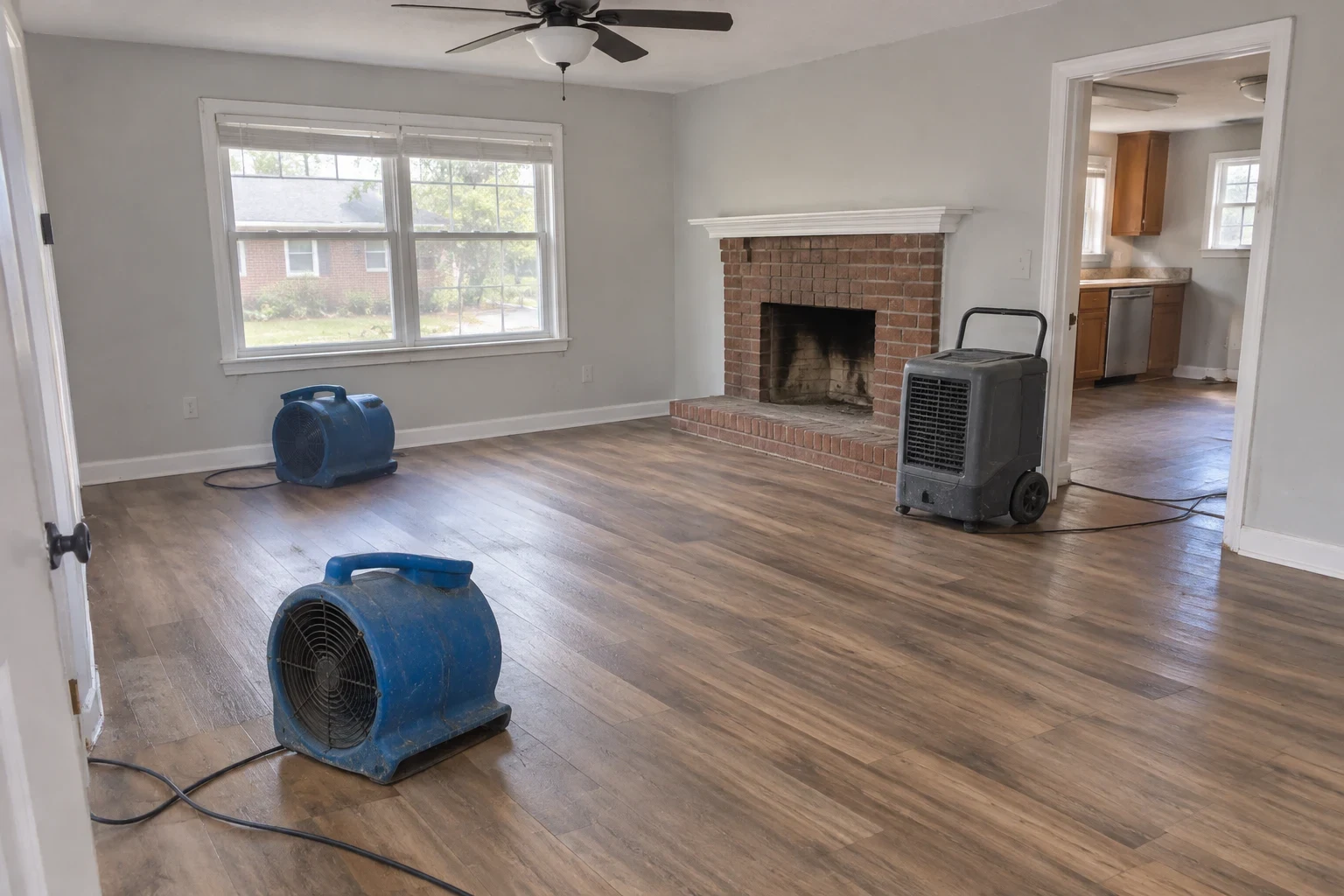
Heavy thunderstorms and the remnants of tropical systems bring sudden rain, and long humid summers slow natural drying. Damp drywall and carpet pad left in that air can start growing mold within a few days. We set dehumidifiers and air movers to the specific materials involved and take readings until they return to normal.
Winter pipe freezes
Cold snaps are short but sharp, and pipes in exterior walls, garages and crawl spaces are the usual ones to split. The leak often shows up only when the thaw comes. Shut the main valve if you can, then call; we will extract the water and open only the wall sections that need it.
Permits and repairs
Cosmetic work like drywall, paint and flooring usually moves quickly, while structural, electrical or plumbing changes generally need a permit and inspection from the local building office. When your rebuild calls for one, we pull it and schedule the inspection, and your contact keeps you updated on timing.
One call starts the drying
Tell us your town and what happened, and we will send someone out, day or night, for emergency water damage response. The same person who answers will coordinate your job until the last room is finished.