ServicesFlood Cleanup
Flood Cleanup in Mechanicsville
When outside water gets into your home, flood cleanup means more than pumping it out. We remove the water, silt and soaked materials, sanitize and dry the structure, and document everything for your insurer. One person guides you from the first call to the final walkthrough.
What flood cleanup involves
Flood water is different from a burst pipe. Water that comes in from outside carries soil, fertilizer, bacteria and whatever it crossed on the way, so anything porous it touched has to be treated as unsanitary. That changes what can be kept, how it is cleaned and how carefully the work is done.
Drywall wicks water well above the visible line. Carpet pad holds it like a sponge, and hardwood starts to cup within a day or two. In basements and crawl spaces, wet insulation and framing can stay damp long after the floor looks dry. Central Virginia's heavy summer storms and the remnants of tropical systems are the usual cause, and the result is the same either way: the sooner the right materials come out, the more of your home can be saved.
Throughout the job you deal with one person. They walk the house with you, explain what we are removing and why, keep your insurer informed and stay your contact until the last dehumidifier leaves.
What the work includes
- 01
Water and silt removal
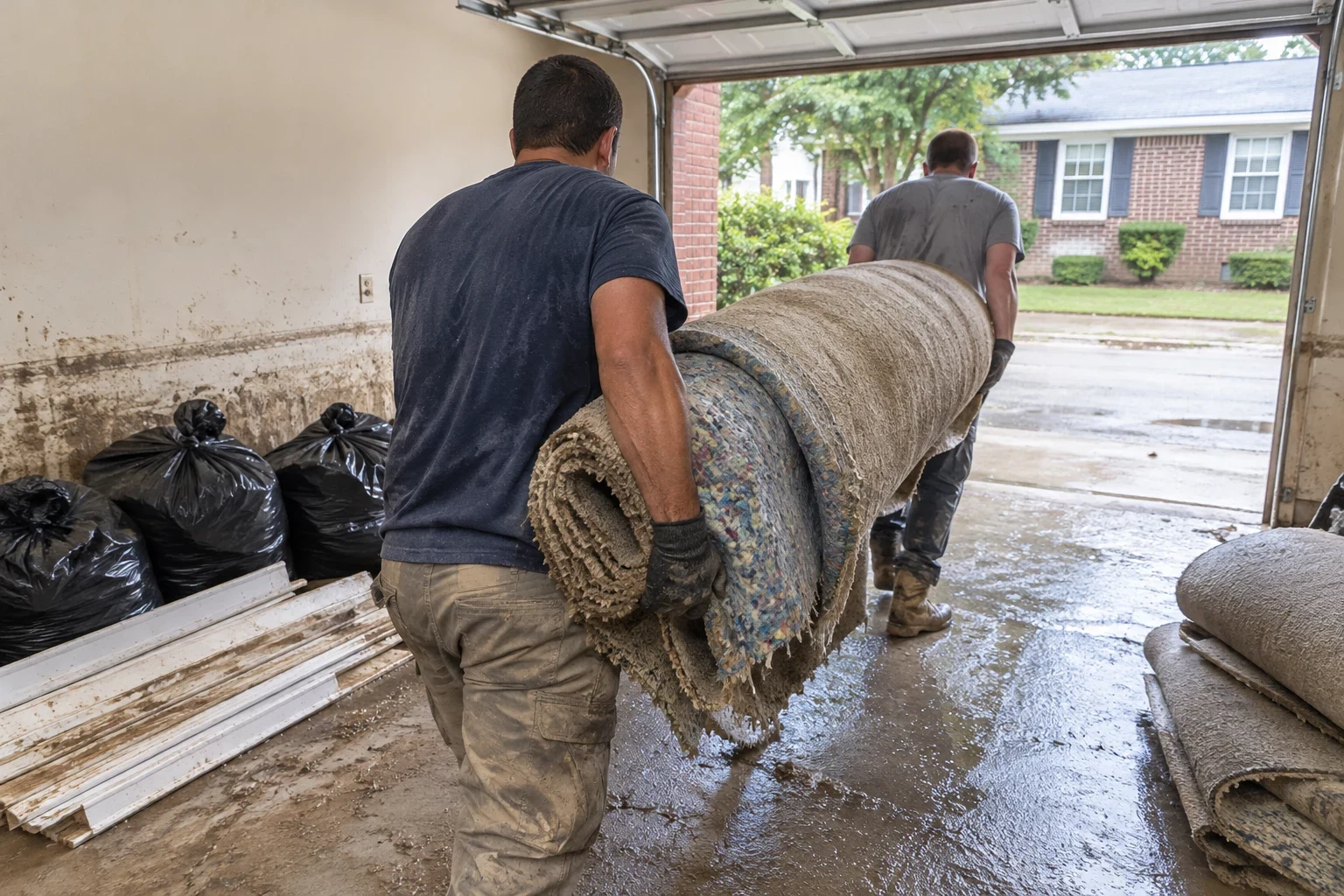
We pump standing water and extract what has soaked into floors, then shovel and squeegee out the mud and silt that floods leave behind. This is the same equipment we use for water extraction, set up for dirtier water.
- 02
Careful removal of ruined materials
Flooded drywall is usually cut a measured distance above the water line so the wall can be closed up cleanly later. Carpet pad, wet insulation and swollen trim come out. We remove only what moisture readings and contamination justify, and we tell you before anything goes.
- 03
Cleaning and sanitizing
Remaining framing, subfloor, concrete and hard surfaces are cleaned and treated with an antimicrobial. This step matters most with outside water, which is rarely clean.
- 04
Structural drying
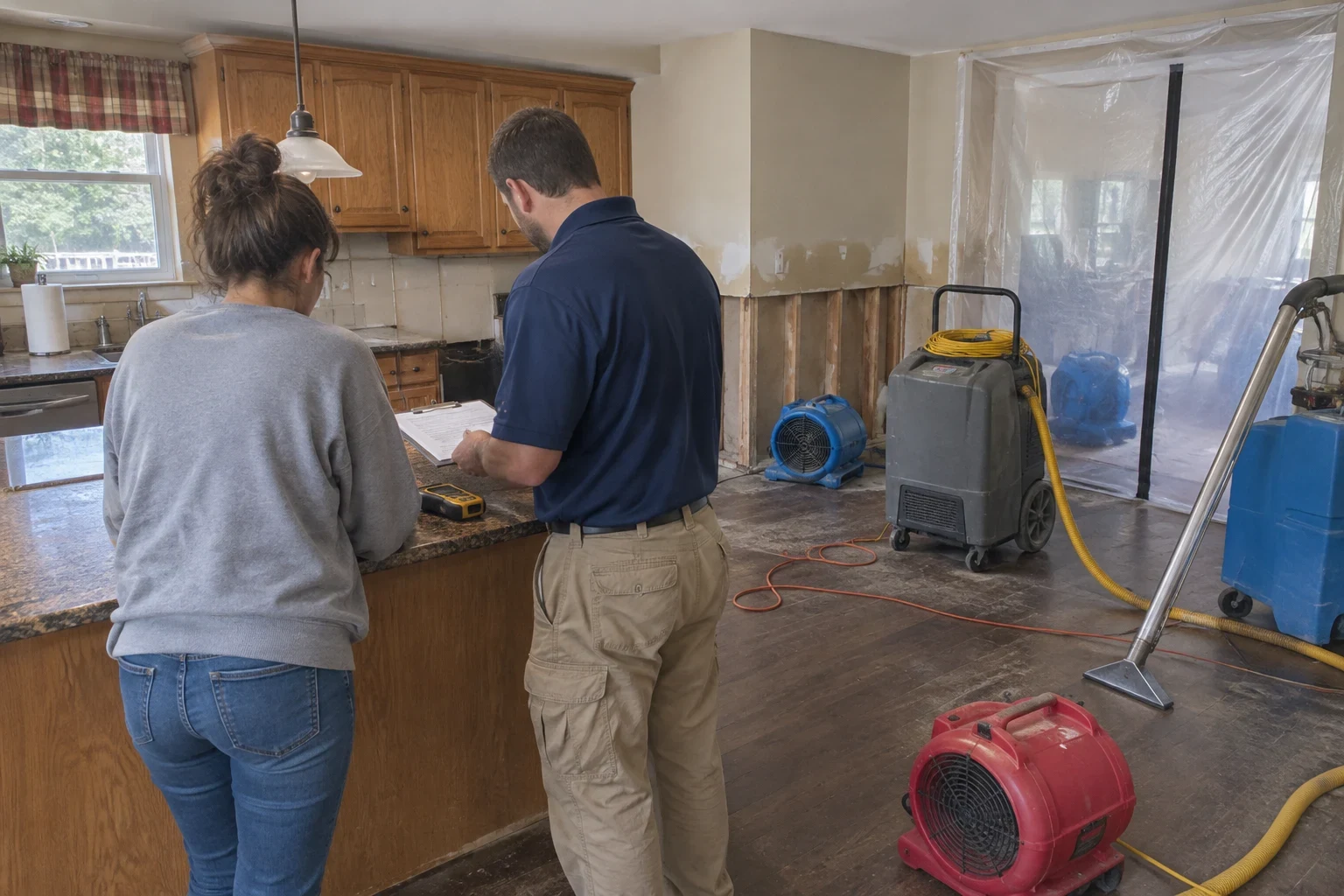
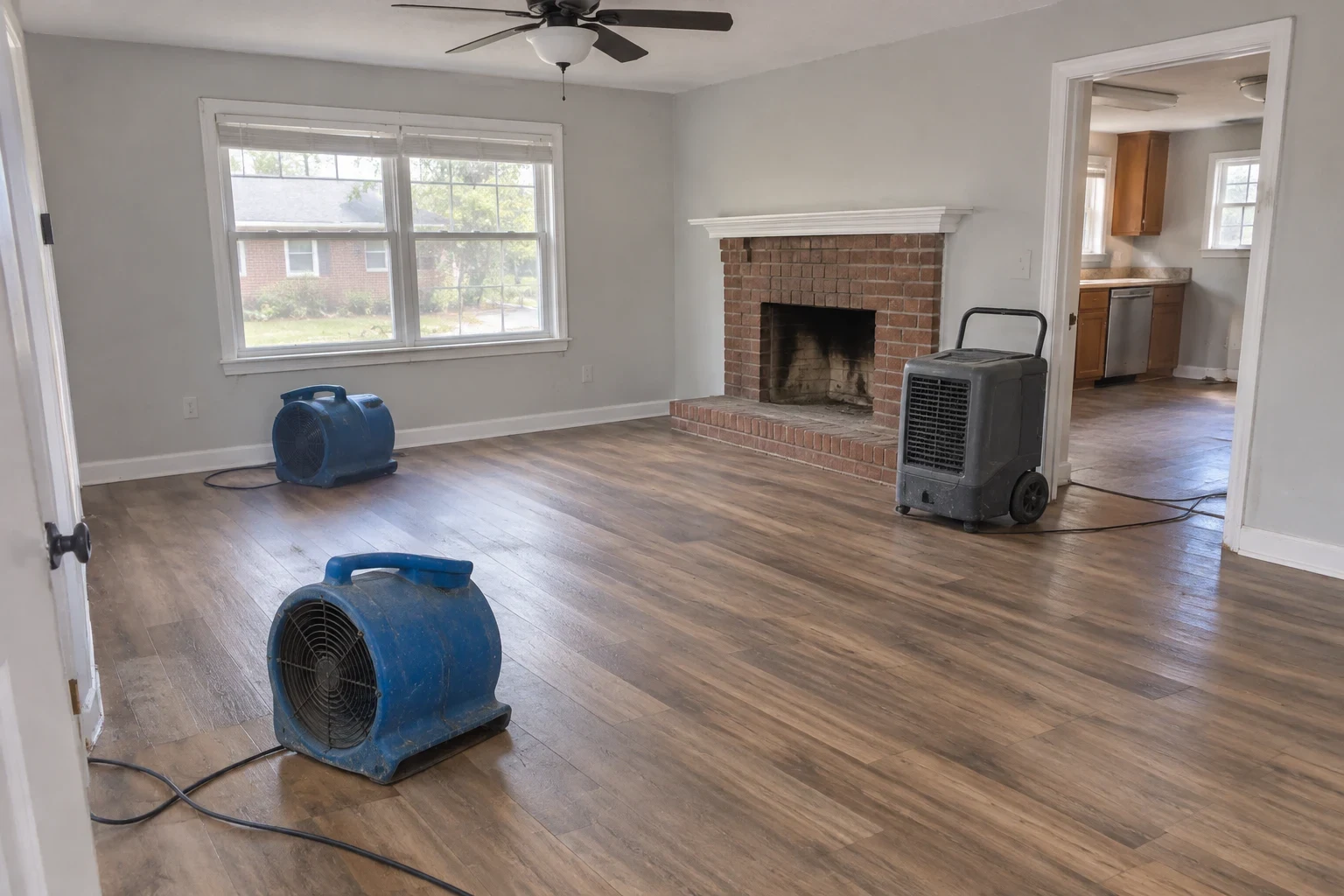
Air movers and dehumidifiers are placed for the size and layout of each room, then adjusted daily. Our drying and dehumidifying page covers how we measure progress.
- 05
Photos and moisture records
We photograph every affected area and log readings from start to finish. You receive copies for your claim and your own files.
Questions about Flood Cleanup?
Call(804) 707-7194Signs your home needs flood cleanup
Standing water after a storm
Water pooled in a basement, crawl space or ground-floor room means it has already reached materials you cannot see.
A tide line on the walls
A stain or ripple along the drywall shows how high the water rose. The wet zone inside the wall is often higher.
Carpet that squishes underfoot
If the carpet feels damp days later, the pad beneath is saturated and the subfloor is likely wet too.
A musty smell that keeps coming back
Odor that lingers after the water is gone points to moisture trapped in walls, insulation or a crawl space. Left alone, it can turn into a mold remediation job.
Floors lifting or cupping
Hardwood edges rising or laminate seams swelling mean moisture is moving up from below.
How a flood cleanup job runs
- 1
The first phone call
Tell us where the water came in and how far it has spread. Our standard is on site in 60 mins or less. If outlets or cords sit in wet areas, we will talk you through staying safe before the crew pulls up.
- 2
Free inspection and plan
Your coordinator walks the house with a moisture meter and thermal camera and maps every wet area. You hear in plain terms which materials are beyond saving and which ones will recover with drying, before anything is touched.
- 3
Extraction and tear-out
Crews pump and extract water, clear silt and remove damaged materials. Furniture and belongings are moved, blocked up or set aside so they stay protected.
- 4
Cleaning and drying
Surfaces are sanitized and drying equipment goes in. We check readings each day and reposition equipment as rooms dry at different rates.
- 5
Final readings and next steps
When materials reach dry standard, we confirm it with you and hand over the records. If walls and floors need putting back, our repairs and rebuild work picks up from there with the same contact.
What affects the cost of flood cleanup
Every flood is priced on what we find, not on a flat rate. After the inspection, your coordinator explains the scope line by line before work begins. We work with most major insurance companies and can share our documentation directly with your adjuster, though coverage decisions are theirs.
- Area and depth
- One room with an inch of standing water needs far less labor than a finished basement sitting under a foot of it. How much floor is wet, and how high the water climbed, set the crew size and the amount of equipment.
- Materials affected
- Drywall, carpet and fiberglass insulation are removed more often than tile or concrete. Finished spaces with built-ins take more care to take apart.
- Contamination level
- Outside water with heavy silt, or water mixed with sewage, requires more protective work and disposal. Sewage involvement shifts the job toward our sewage cleanup process.
- Access and drying time
- Tight crawl spaces slow the work, and dense materials or humid weather can add days of equipment on site.
Flood cleanup questions
Will my insurance pay for flood cleanup?
That depends on where the water came from and which policies you carry. Rising water from outside is typically left out of a standard policy and handled under separate flood coverage, while a sudden leak inside the house is often treated another way. We record the damage thoroughly and can explain the claim steps, but the decision belongs to your insurer, so it helps to call them early.
Can I stay in my home during cleanup?
Often yes, if the damage is limited to a basement or a few rooms and the power is safe. Drying equipment runs around the clock and is noisy. If the water was especially dirty or living areas are affected, we will tell you honestly if staying makes sense.
Should I start cleaning up myself?
Do not enter standing water if outlets or appliances are submerged. Once it is safe, photograph everything before moving it, and set aside valuables. Leave tear-out to us so nothing is removed that your adjuster needs to see.
How long does flood cleanup take?
Extraction and tear-out typically take a day or two. Drying usually runs several more days depending on materials and weather. Your coordinator will give you an updated estimate each day based on the readings.
Can flooded drywall or carpet be saved?
With outside flood water, carpet pad and the lower section of drywall almost always need to go because they soak up whatever the water carried in. Solid wood, concrete and framing can usually be cleaned and dried in place.
Flood water in your home? Let's start
We answer day or night for emergency water damage response. One person will meet you, assess the damage and stay with the job until your home is dry.