ServicesMold Remediation
Mold Remediation in Mechanicsville
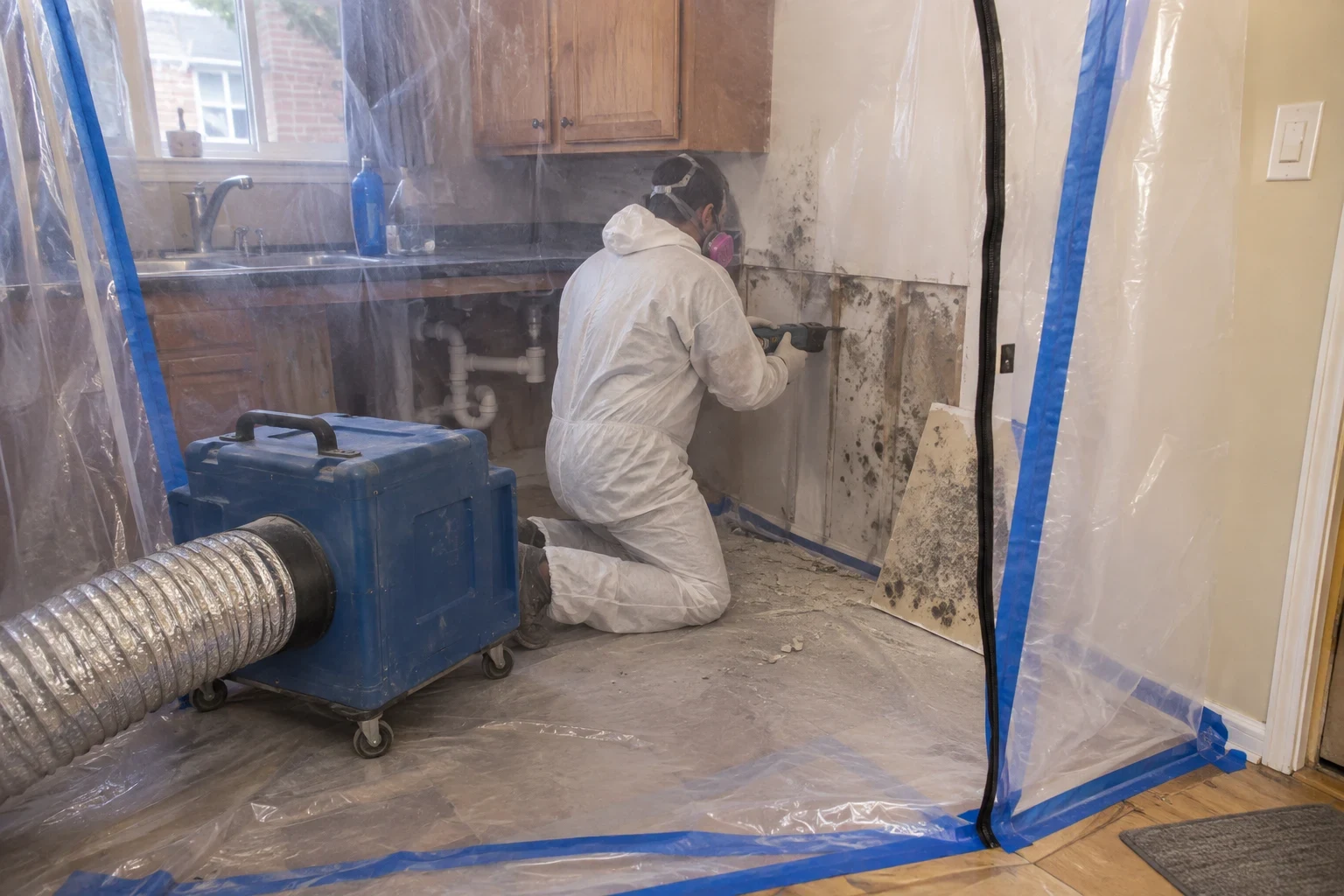
Mold grows where water stayed too long. We seal off the affected area, remove damaged materials with care, clean what can be saved and dry the structure thoroughly. One person stays with your job from the first visit to the final walkthrough.
What mold remediation actually involves
Mold is rarely the real problem. It is the sign of moisture that was never fully dried: a slow leak behind a vanity, condensation in a crawl space, a ceiling stain from a roof drip. Spraying the visible spots does little, because the growth usually runs deeper into drywall paper, insulation and wood framing.
Proper remediation keeps spores from spreading while the work happens. We isolate the area, take out porous materials that are past saving, clean the framing and surfaces that remain, and dry everything to normal readings before anything is closed back up.
You speak with the same person throughout. That person explains what we found, walks you through the plan and coordinates each step, so you never repeat your story to a new crew.
What the work includes
- 01
Sealing off the work area
We hang plastic sheeting and tape doorways so the rest of your home stays clean. Air scrubbers run inside the enclosure, creating negative pressure that pulls air through HEPA filters instead of letting it drift into hallways.
- 02
Careful removal of affected materials
Drywall, insulation and carpet pad hold mold in ways that cleaning cannot reach. We cut out only what is affected, bag it inside the sealed area and carry it out closed.
- 03
Cleaning of framing and hard surfaces
Studs, joists and subfloor are HEPA vacuumed, then cleaned by hand or lightly sanded where growth has settled into the grain. Solid wood usually stays.
- 04
Finding and addressing the moisture
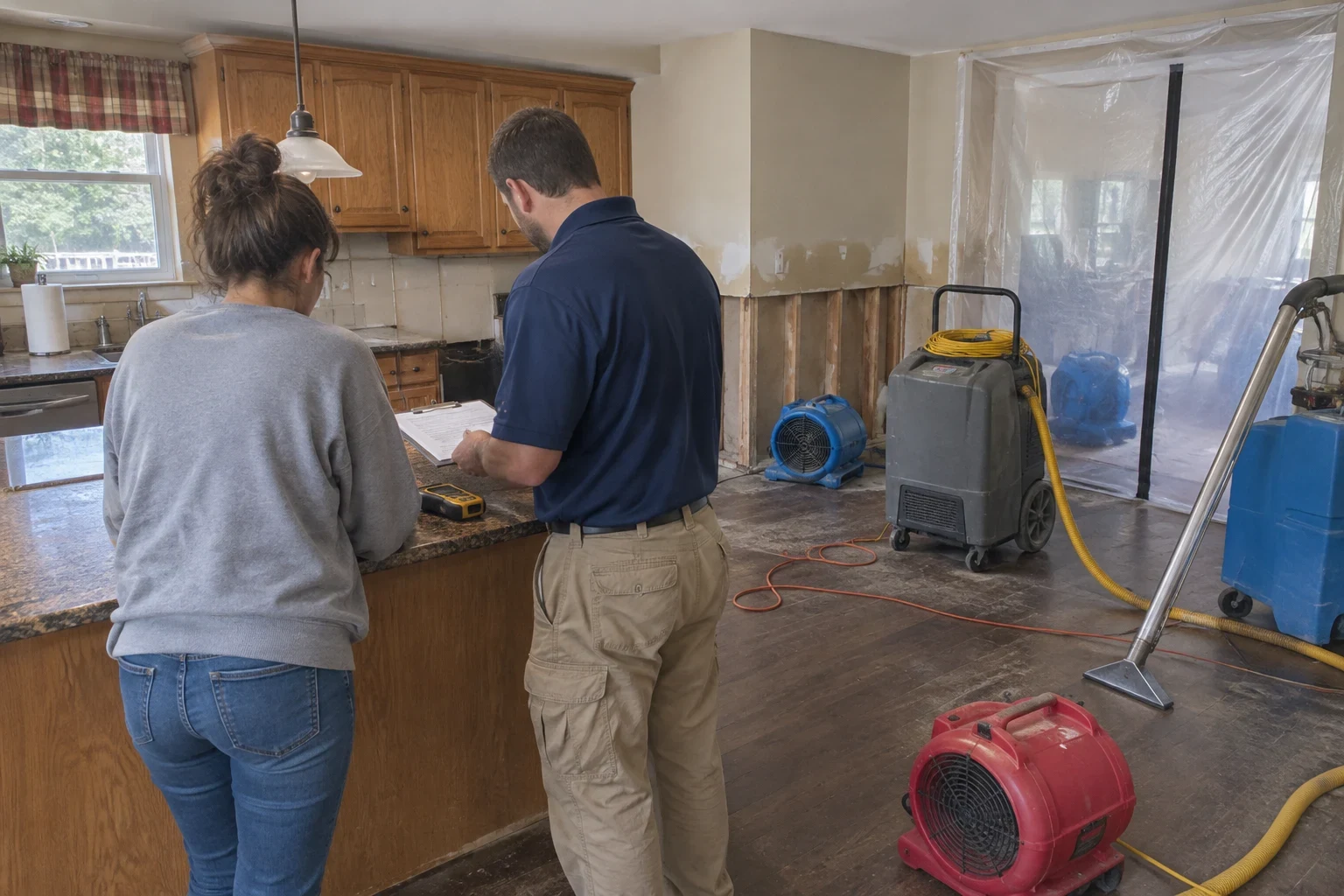
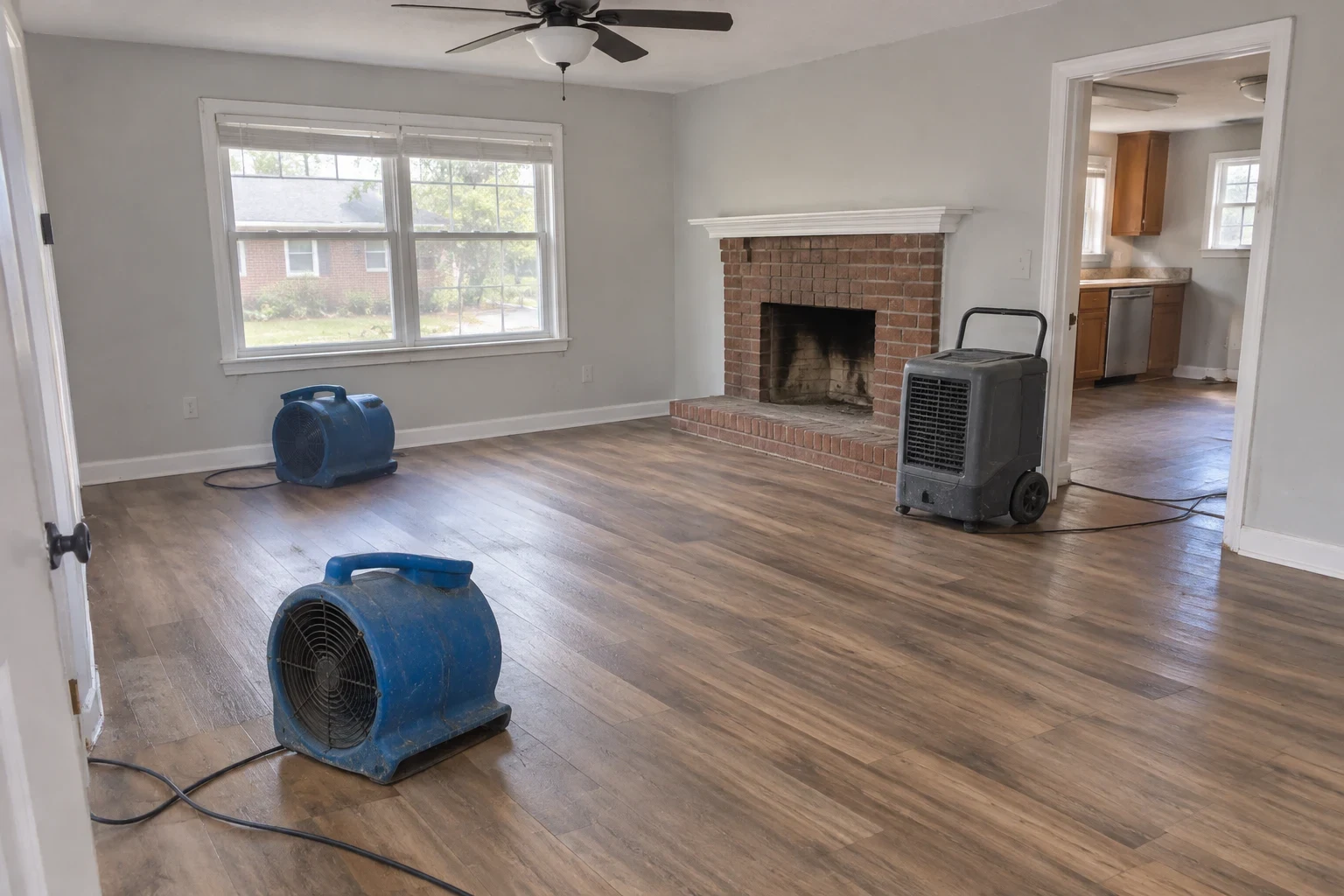
We trace where the water came from and dry the structure with dehumidifiers and air movers. If the source needs a plumber or roofer, we tell you plainly.
- 05
A photo record of the job
Before, during and after pictures show what was behind the wall and what left your home. We work with most major insurance companies, and an adjuster reviewing a claim generally finds this kind of record easier to follow than a verbal account.
Questions about Mold Remediation?
Call(804) 707-7194When a mold inspection makes sense
An earthy odor that keeps coming back
If a room smells stale again a day after you open the windows, growth is often hiding behind a wall, under flooring or in the crawl space.
Spots or staining on walls and ceilings
Gray, green or black speckling, or a brown ring that keeps darkening, usually means moisture is still feeding something.
A leak that was never professionally dried
Wet drywall and insulation can begin growing mold within a couple of days. If a past leak was only wiped up, it is worth checking.
Damp crawl spaces or sweating ductwork
Humid Virginia summers push moist air under homes, where it condenses on cool pipes, ducts and floor joists.
Warped baseboards or bubbling paint
These point to moisture inside the wall, often well before any mold shows on the surface.
How a remediation job runs
- 1
Free on-site inspection
We check the affected area with moisture meters, look for the source and show you what we see. You get an honest read on how far the growth goes.
- 2
A clear plan and written estimate
Your contact explains what needs to come out, what can be cleaned and how long the work should take, line by line.
- 3
Setup and removal
We protect floors and furniture along the path in, build the plastic enclosure and start air filtration, then remove and bag affected materials.
- 4
Cleaning and drying
Remaining surfaces are cleaned and dried to normal moisture readings. We check again before anything gets closed in.
- 5
Walkthrough and next steps
We take down the sheeting, clean up and walk the area with you. If walls or floors need rebuilding, our repairs and rebuild work picks up from there with the same person guiding it.
What shapes the cost
We price mold work only after looking on site, since a small stain on the surface can sit over a much larger patch inside the wall. Your written estimate breaks the job into parts so each charge is clear. If something changes, we talk with you before any cost is added.
- Size of the affected area
- A single bathroom wall and an entire finished basement call for very different sheeting, equipment and labor.
- Which materials are involved
- Cleaning framing costs less than removing drywall, insulation and flooring. Hidden growth found during removal can change the scope, and we stop and talk it through with you.
- Access to the space
- Crawl spaces, attics and areas behind cabinets take more time and care to seal off and work in.
- Fixing the moisture source
- A plumbing repair, a vapor barrier or added drying time all affect the total, and skipping them invites the mold back.
Mold remediation questions
Can I just clean the mold with bleach?
Small spots on tile, glass or other hard surfaces can be wiped up. Porous materials are different: bleach fades the color on drywall and raw wood while the roots keep growing below. It also leaves the moisture that fed the mold untouched.
Do we need to leave the house during the work?
Usually not. The plastic barrier and negative air pressure keep the work area sealed from the rest of your home. For larger jobs or anyone with breathing concerns, we will talk through whether staying elsewhere for a few days makes sense.
Will my homeowners insurance cover mold remediation?
It depends on your policy and on what caused the moisture. Mold from a sudden covered event, such as a burst pipe, is more often covered than mold from a long, slow leak. We work with most major insurance companies. Our job photos and written notes give your adjuster a clear record to review, though the coverage decision stays with them.
How will I know the mold is gone?
We show you the cleaned framing before anything is closed up, along with moisture readings that confirm the area is dry. If you want independent clearance testing, we can arrange access for a tester of your choosing.
Will the mold come back?
Mold returns when moisture returns. That is why we spend as much attention on the source and on drying as on the removal itself, and why we tell you plainly if a repair outside our work is needed.
Have the musty spot looked at properly
One call brings a careful inspection and a straight answer about what is behind the wall. If water is still coming in, we also respond to active water damage around the clock.