ServicesSewage Cleanup
Sewage Cleanup in Mechanicsville
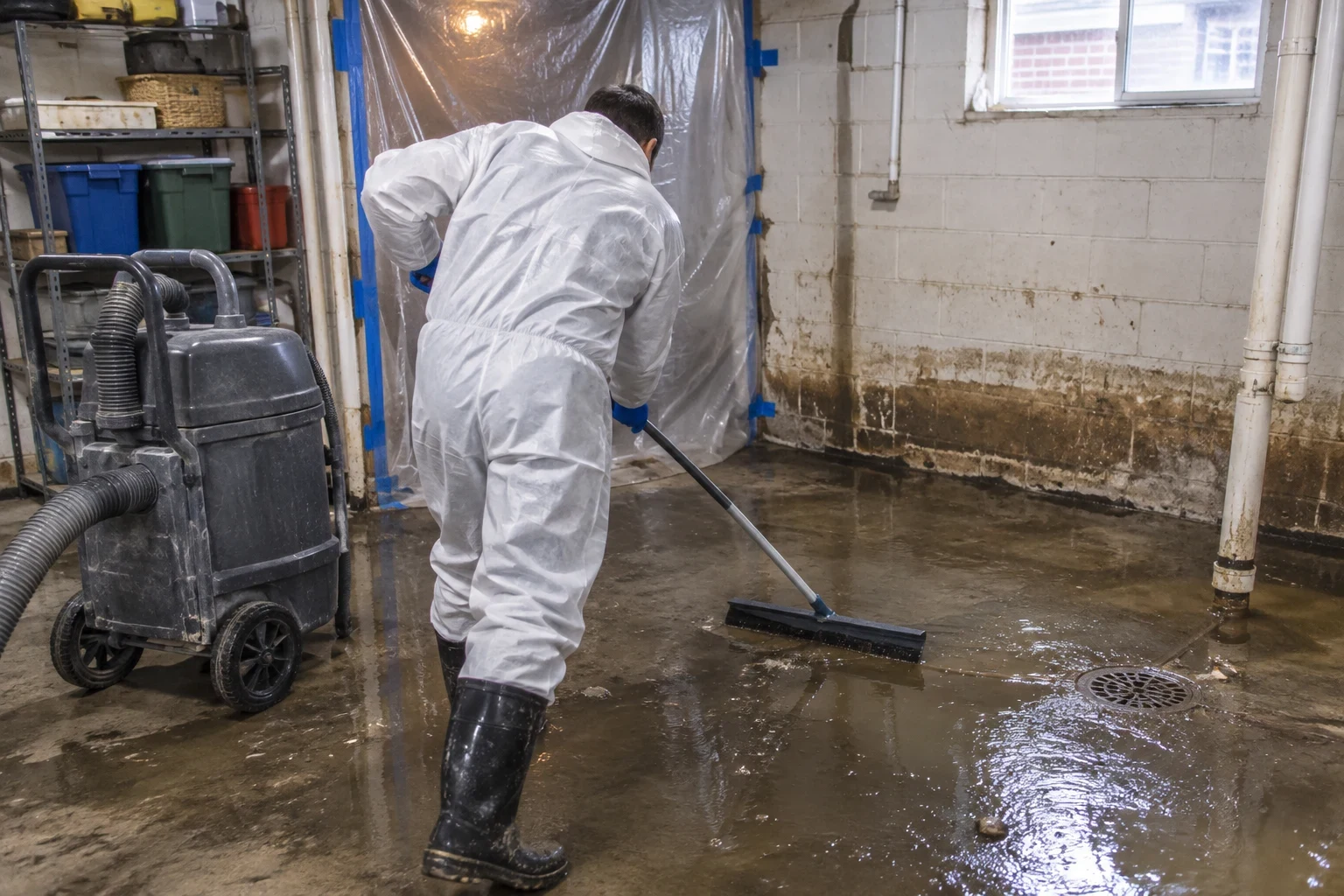
A sewage backup is not ordinary water, and it should not be treated like it. We seal off the area, remove what cannot be cleaned, disinfect what can and dry the structure properly. One person answers your questions from the first call to the final walk-through.
Sewage needs a different kind of care
Water from a backed-up toilet, floor drain or sewer line carries bacteria and other pathogens. It soaks into carpet pad, drywall, insulation and the bottom plates of walls, and those porous materials cannot be made safe again by drying alone. Hard surfaces such as tile, concrete, sealed wood and metal can usually be cleaned and disinfected.
Our job is to sort one from the other honestly, remove what has to go and leave the rest of your home clean, dry and ready for repairs. We work carefully enough to do it right and quickly enough that the smell and moisture do not settle into the rooms around the damage.
You will deal with one person throughout. That person explains what we found, walks you through the plan before work starts and keeps you updated while the crew is in your home.
What the work includes
Sealing off the affected area
We close the space off with plastic sheeting and run air filtration so tainted dust and odor stay put. Clean rooms stay clean.
Removal of sewage and solids
Standing waste is pumped and extracted, then solids are cleared from floors and low spots. Everything is bagged and handled as biohazard material.
Careful removal of porous materials
Carpet and pad, drywall below the wet line, insulation and similar materials are cut out cleanly, usually a little above the visible damage. Straight, measured cuts make the later rebuild neater.
Cleaning and disinfection
Remaining surfaces are scrubbed, then treated with a disinfectant suited to sewage. Framing, slab and subfloor get the same attention as the visible surfaces.
Drying and moisture checks
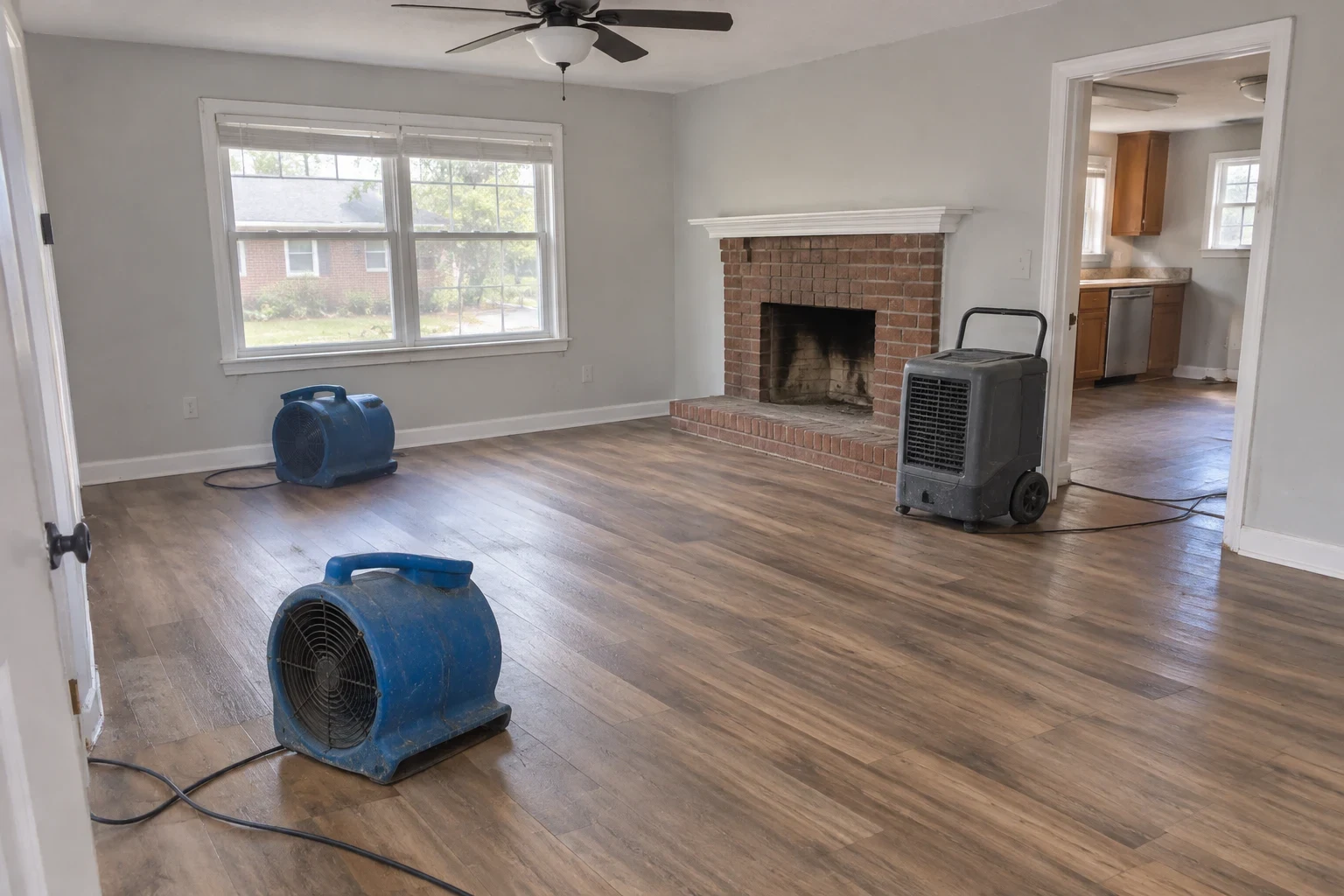
Once the area is clean, we set dehumidifiers and air movers and measure moisture until the structure is dry. It is the same method described on our Drying and Dehumidifying page.
Documentation for your records
We photograph the damage and list what was removed and why. You keep a clear record if you decide to file a claim.
Warning signs of a sewer backup
- Dark water at a basement drain
- When murky water seeps up through a floor drain in a basement or laundry room, the main line is usually blocked or overloaded. A heavy summer downpour can bring this on in an afternoon.
- Fixtures backing up together
- A toilet that gurgles when the washer empties, or a tub that fills while a sink runs, tells you the blockage sits past all of them.
- An odor that keeps coming back
- If a sewer smell returns no matter how often you clean, a slow leak may be hidden inside a wall, beneath a floor or in the crawl space.
- Brown marks below a bathroom
- Staining on the ceiling under a bathroom, or along the baseboard beside a toilet, often traces back to a failed wax ring or a cracked drain line.
- Soggy carpet near a cleanout
- Carpet that stays damp or turns darker around a cleanout or lower-level bathroom has probably drawn up sewage from underneath.
How the job runs
- 1
Your call and our arrival
Describe what you see and which rooms are involved. A crew heads out right away, and we are on site in 60 mins or less. Nothing is charged for that inspection.
- 2
Inspection and a plain plan
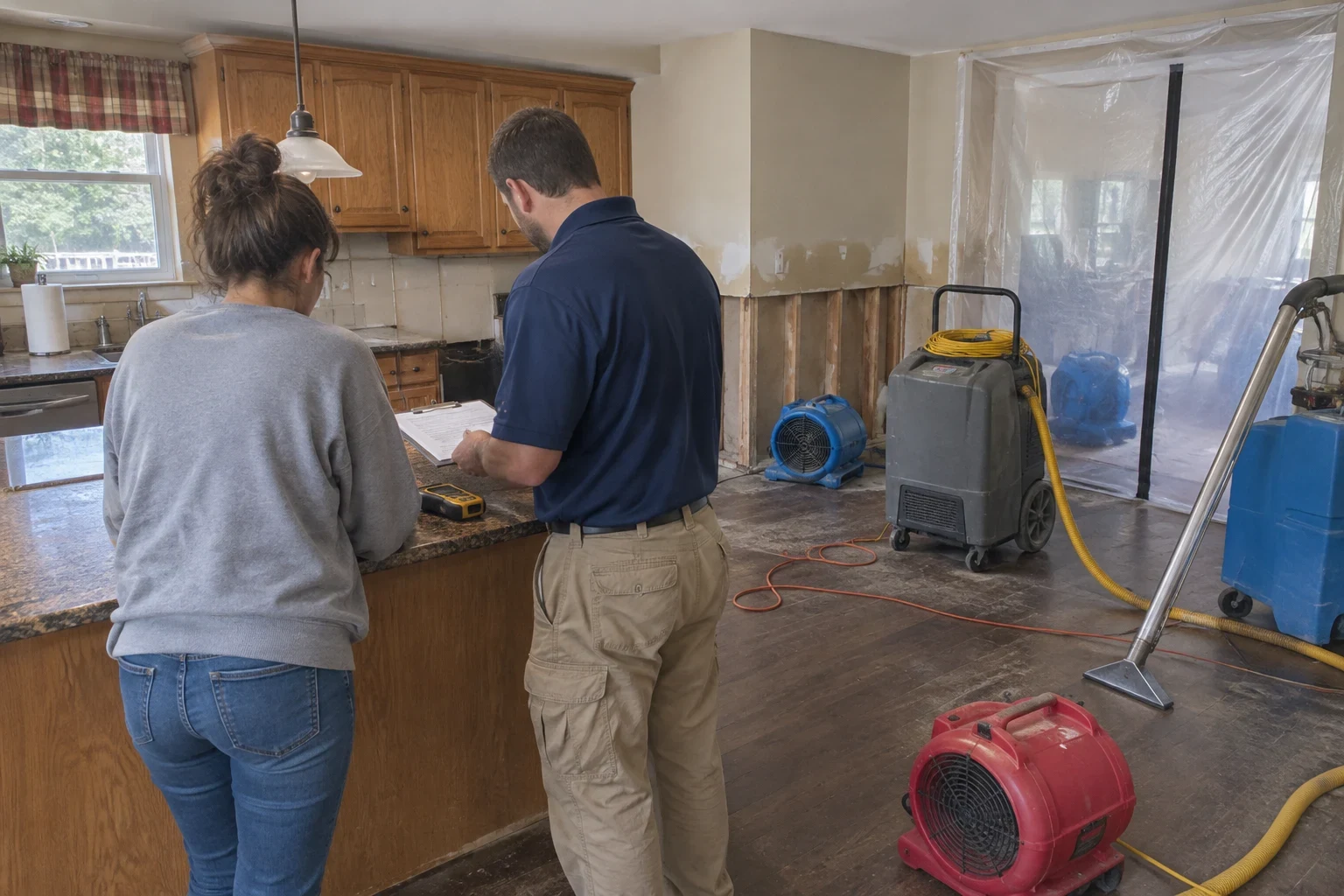
We check how far the water traveled, take moisture readings in walls and floors and photograph what we find. Before anything starts, your point person explains what must come out, what can be cleaned and how the work will go.
- 3
Removal and disinfection
The crew wears protective gear, closes off the area and takes out the soiled materials. Every remaining surface is cleaned and disinfected, and we keep you clear of the work zone until it is safe.
- 4
Drying and final check
Equipment runs until our readings show the structure is dry. We remove the equipment, tidy up and walk the space with you. If rebuilding is needed, our Repairs and Rebuild work picks up from there with the same person guiding it.
What affects the cost
Sewage cleanup is priced on what is actually in your home, so we give you the cost after the inspection, not before. You will see the scope in writing, and any change is explained to you before it happens.
- How far the water spread
- A backup confined to a tiled bathroom is a smaller job than one that reached carpeted rooms, a finished basement or a crawl space.
- Materials that must be removed
- Carpet, pad, drywall, insulation and cabinet bases add removal and disposal time. Tile and concrete usually stay.
- How long it sat
- Sewage left in place for a day or more wicks higher into walls and may have started mold growth, which widens the work.
- Access and layout
- Tight crawl spaces, finished ceilings and furniture that has to be moved all change the labor involved.
- Your insurance policy
- Sewer backup coverage varies from one policy to the next. We work with most major insurance companies, and we will share our photos and written scope with your adjuster. What gets covered is your insurer's call.
Sewage cleanup questions
- Is a small backup something I can clean myself?
- If a little overflow lands on tile and you deal with it at once, gloves and a strong disinfectant are sometimes enough. The trouble starts when sewage reaches carpet, drywall or other porous materials, because it soaks in deeper than household cleaning can go. Not sure which you have? The inspection is free, and we will tell you plainly if it is a job you can manage.
- Is it safe to stay in my home during the cleanup?
- Often yes, as long as the work area is sealed off and you stay out of it. Children, older family members and anyone with a weak immune system should avoid the space entirely. After the inspection we will tell you whether staying makes sense for your situation.
- Will my carpet have to be thrown away?
- Carpet and pad that have absorbed sewage are almost always removed, because they cannot be reliably disinfected. Hard flooring is usually cleaned and kept unless water got underneath it.
- Do you fix the pipe that caused the backup?
- Our work is the cleanup, drying and any rebuilding of damaged materials. If a sewer line or drain needs repair, a plumber handles that part, and we can coordinate timing so the line is fixed before we close up walls or floors.
- Does homeowners insurance cover sewage backups?
- Many standard policies leave out sewer backup unless a specific endorsement was added. Your policy or your agent can confirm it. Either way, we photograph and document the damage so you have the records you need.
Get the backup handled properly
Sewage should not sit in your home while you wait. The inspection is free, and one person will guide you through every step after that.